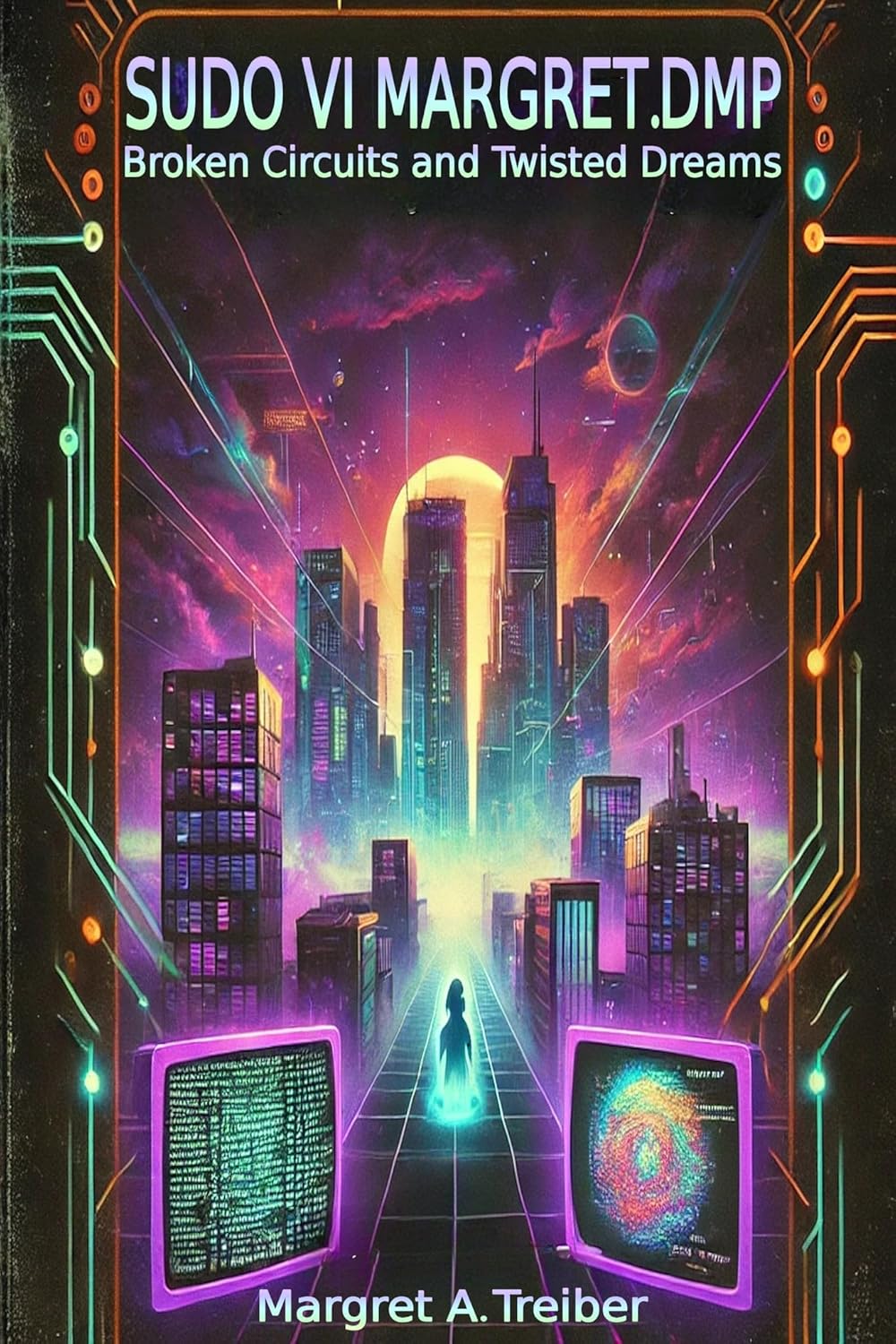
🛎️ GET SUDO VI MARGRET.DMP FOR FREE FOR A LIMITED TIME ONLY.
Welcome, fellow glitch!
Want free, weird, rebellious sci-fi?
Sign up for my newsletter and get a free copy of Sudo VI Margret.DMP, a collection of broken circuits and twisted dreams.
You'll also get occasional, glitch-filled updates, and first dibs on other unhinged books.
MARGRET A TREIBER
Meet the author
Margret A. Treiber grew up in analog America and adapted just in time to watch the digital world fall apart. Her stories are full of malfunctioning tech, aging superheroes, bureaucratic apocalypse, and emotionally unstable robots trying to do their best.
She's a systems expert, chaos manager, and unapologetic lover of sarcasm. She doesn’t trust cloud storage or AI—but here we are.
She’s the award-winning author of Japanese Robots Love to Dance, Death Engine Protocol, and Sudo VI Margret.DMP, and her stories have been featured in anthologies that will survive her. She is also the editor-in-chief of Sci-Fi Lampoon.




Available on Amazon.
Click the cover image to open the links.
If you like SUDO VI MARGRET.DMP, you'll dig these:
What my readers say

Compelling sci-fi dystopia! (Death Engine Protocol)
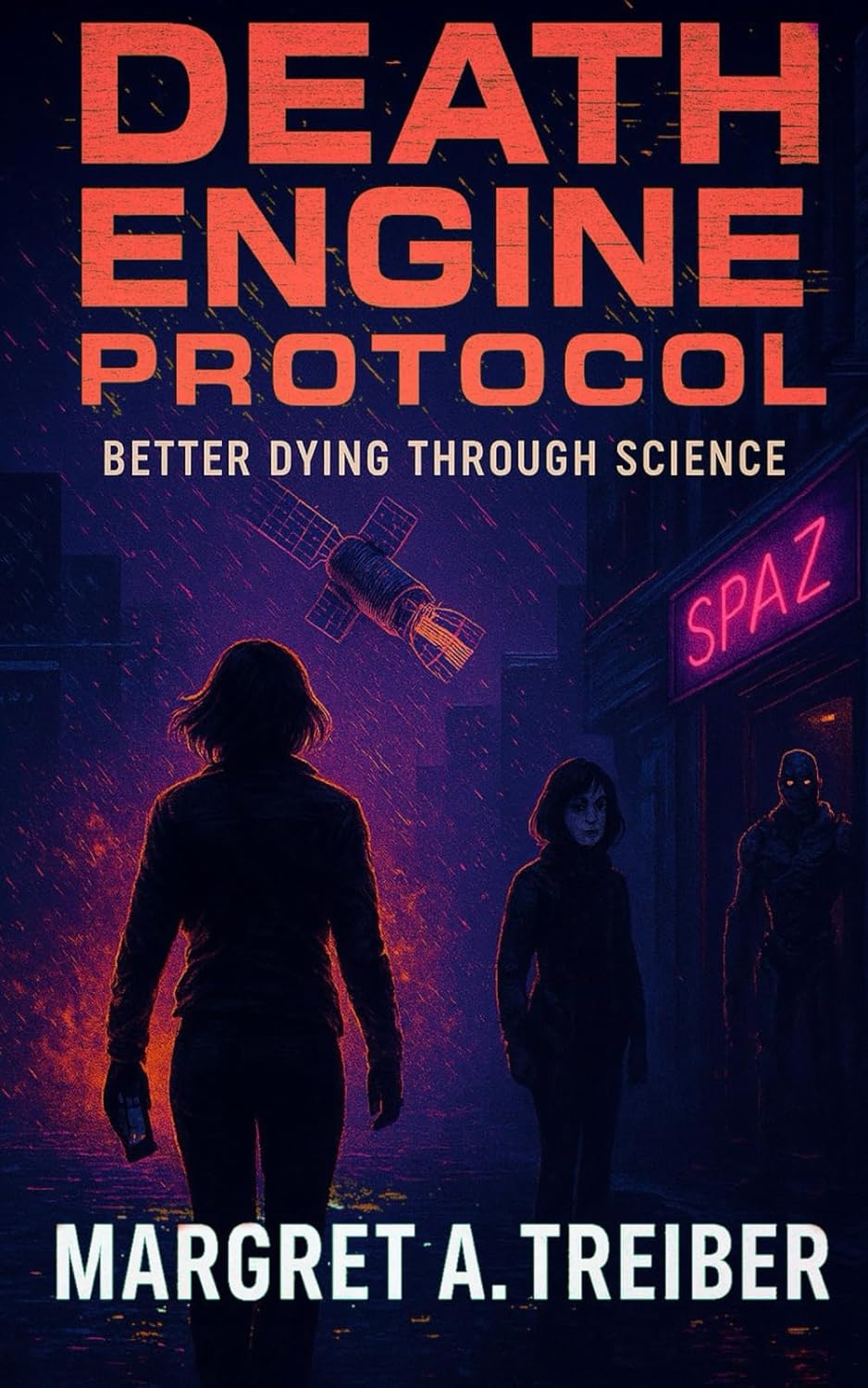
"Death Engine Protocol: Better Dying Through Science" by Margret A. Treiber offers a compelling sci-fi experience with a dystopian edge. The narrative toys with concepts of memory and survival, as seen in the line, “Dreaming, it’s an information dump… The more time passed, the less vivid my memories might be,” which hints at the psychological toll of repeated trauma. There’s a dry humor in moments like “Taking out the RoboTrash,” balanced by the quiet tension of “It’s been a day since the last time I died” and the cautious relief of “Another day of practice passed without my death. I was feeling pretty good about it.” These snippets reveal a world where death is routine, yet the emotional weight lingers. Treiber’s writing carries a sharp, introspective tone that suits the genre, making this short read a solid pick for those who enjoy dystopian themes with a touch of dark wit. It’s an engaging, thought-provoking read.
Amazon Customer
iRobot comedy (Japanese Robots Love to Dance)
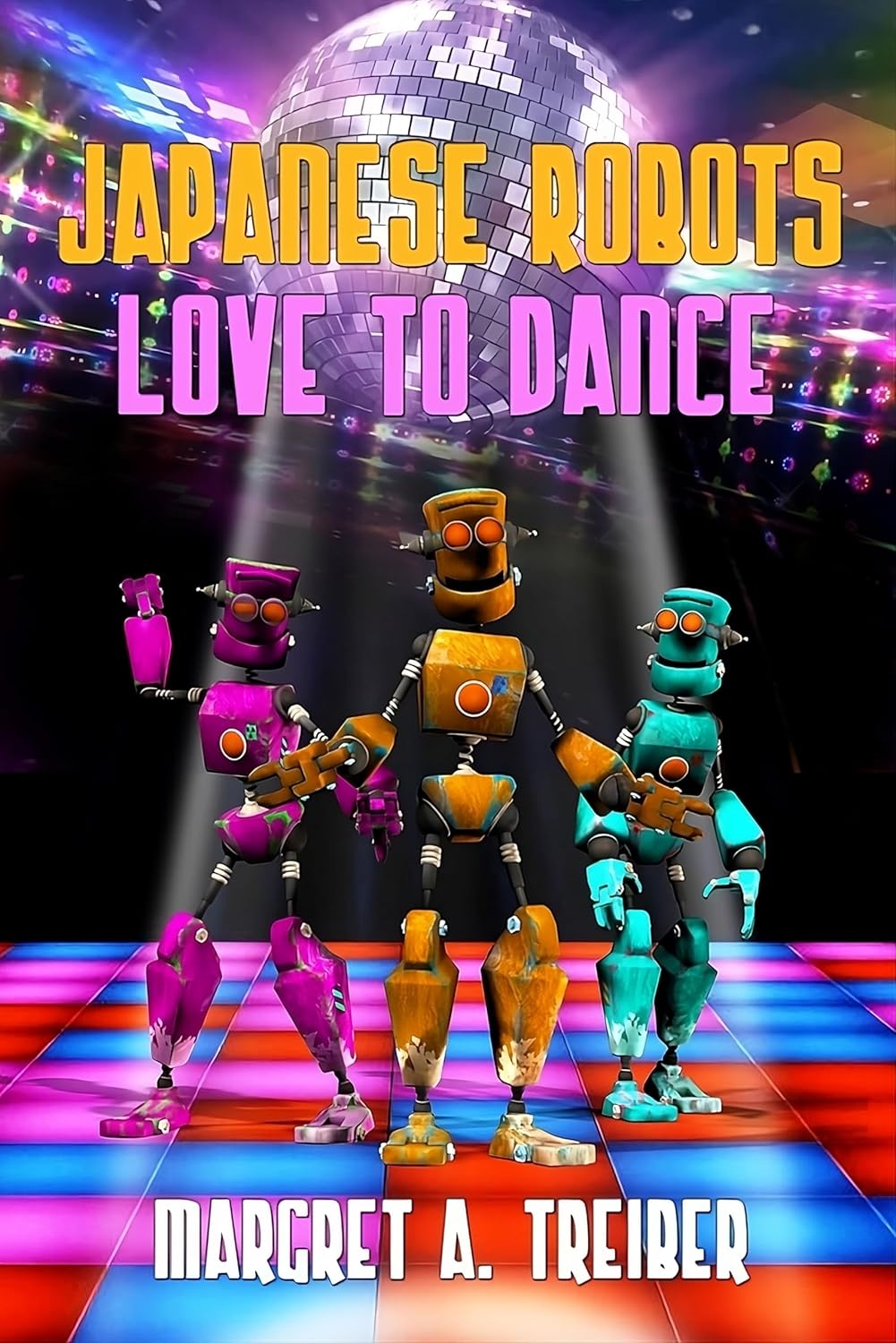
This book is like iRobot but hilarious and kooky. It is a collection of robot stories, but also some alien stuff. The writing is also clear like Asimov, but imagine if Asimov wrote comedy. A really fun book. I’ve never read anything like it – quite unique. And the sci-fi ideas in it are really smart – nothing to sneeze at in terms of just being smart sci-fi as well.
I like that the collection of stories involves the same universe and cast of characters and the universe keeps growing with new stories. I hope there is a sequel one day. I did really enjoy a lot of the characters and cared about them. Bring them back please!
It’s also a cute legal drama as well, in a way. Imagine a quirky legal drama like Ally McBeal but with Asimov’s robots set in a future world. Can’t wait for book 2! Write it please!
Amazon Customer
Fun, quirky, and lighthearted! (Japanese Robots Love to Dance)
Fans of Futurama should find the irreverent, off-beat future familiar (in the best kind of way). Through the interconnected stories of Japanese Robots Love to Dance, Treiber creates a future that feels both parody and plausible all at once. The cast of characters is as varied in personalities as it is in metal alloys--and through the book's various vignettes, Treiber delivers occasionally poignant moments interspersed between the fun antics. The prose is without flourish, yet effective enough to tell the story well. Sometimes, showy/sophisticated writing can get in the way of the story--Treiber's prose is transparent, which makes for super light reading!
For people who enjoy scifi--but tire of the mopey and pessimistic tone that sometimes colors the genre--JRLtD is a welcome reprieve! Enjoy it before your optical lenses are repossessed by the company that owns the copyright to your visual processor
Amazon Customer
David Bowie says: Let’s Dance (Japanese Robots Love to Dance)
Let’s get the technical stuff out of the way: Margret A. Treiber’s Japanese Robots Love To Dance is a well-written series of loosely-collected stories following our main character, Gabe Siegel, a lawyer who ends up working for various incarnations of Artificial Intelligence (and who changes his name mid-novel to Gary Legal). Through argument, guile, and even deception, Legal wins every case for his robotic clients, from a disgruntled garbage truck to, yes, a robot that loves to dance.
That said, where do I go from here?
Robots reminded me of another book that combined science fiction and absurdity, and that’s The Hitchhiker's Guide to the Galaxy. This is especially true for the space-based episodes, in particular Legal’s visit to that outer-space Disney World-esque tourist trap promising “digestible food” and a tower of remarkable height.
The last story ends the novel with a Deus Ex Machina (via that noise those damn kid’s listen to in the future, and call “music”) and a cliffhanger. I felt kind of like I’d stepped off a cliff when the story ended as it did, but, as I reflect, how does one end an absurd comedy? With failure? Not very funny. With victory? Also not funny. Shakespeare just had everyone get married, but that’s Ye Olde school. Douglas Adams confronted this issue in Hitchhiker's Guide, and his solution was to write four more novels, rather than resolve anything. After all, “We all know Japanese robots love to dance. Look at that happy little bugger. How can you reprogram him and erase all the joy off his perky little face?”
Don’t expect too much character growth or development from comedy. Same for Japanese Robots. But do expect characters who are individuals unto themselves, with enough deadpan lines to cook fried rice for an army. Sorry, mixing metaphorical ingredients there.
In conclusion, you’re never supposed to say “in conclusion” in your conclusion. That is to say, the book is funny, an entertaining ride, and well worth your time.
I highly recommend.
Amazon Customer