
The Ultimate Guide for Writers Who Procrastinate
What's the Difference? (Besides Your Ability to Pitch at Parties)
CONCEPT = The Spark
The concept is the "what if?" that woke you up at 3am. It's the kernel, the seed, the thing that made you think, "Oh, that could be interesting."
Concept is NOT a story. It's the idea of a story.
Examples of Concepts:
"What if a girl discovered she had magical powers?" (Yawn. Been done. Keep going.)
"What if a girl discovered she had magical powers—but they only worked when she was lying?" (Now we're talking.)
"Two people fall in love." (Cute. Also describes 90% of all fiction ever written.)
"Two vampire enemies fall in love during a centuries-old war." (Underworld has entered the chat.)
See the difference? A strong concept has that twist, that unique angle that makes it high concept—meaning you can pitch it in one sentence and people actually lean in instead of slowly backing toward the exit.
The Concept Test:
If you can say your idea in one sentence and someone responds with "Ooh, I'd read that," you've got a concept. If they respond with "Yeah, that's nice," you've got a generic idea that needs more spice.
PREMISE = The Story Blueprint
The premise is what happens when you take your concept and add:
WHO it's happening to (characters)
WHAT they're doing about it (plot)
WHY it matters (stakes)
WHERE/WHEN it's happening (setting)
The premise is your story's foundation. It's what goes in your book blurb, your query letter, your frantic explanation to your friend when they ask what you're writing.
Transforming Concept into Premise:
CONCEPT: "A soldier restarts time whenever he dies."
PREMISE: "A soldier fighting aliens gains the ability to restart time whenever he dies—and uses it to become the weapon that might finally win humanity's losing war." (Edge of Tomorrow / Live Die Repeat)
CONCEPT: "A man with magical powers lives in modern Chicago."
PREMISE: "Harry Dresden, Chicago's only professional wizard, takes on supernatural cases the police can't handle—from rogue vampires to faerie politics—while trying not to die. Again." (The Dresden Files)
CONCEPT: "A girl dies of cancer."
PREMISE: "Hazel, a teen with terminal cancer, falls in love with Augustus, a fellow cancer survivor, and together they seek meaning in a life that won't give them the time they deserve." (The Fault in Our Stars)
See the difference?
Concept = Interesting idea
Premise = Actual story you can write
Why This Matters (Beyond Sounding Smart at Writer Conferences)
1. You Can't Write a Concept
Seriously. You can't. Many writers (yes, you, the one frantically typing Chapter 1 right now) start with a cool concept and assume that's enough. Then around Chapter 7, they realize they don't actually have a story—just a cool idea that ran out of steam.
A concept sparks the imagination. A premise sustains 80,000 words.
2. Premises Force You to Make Decisions
When you develop your premise, you have to answer hard questions:
Who is this happening to? (A character with personality, not "chosen one")
What do they want? (And why does the concept make it hard to get?)
What happens if they fail? (If the answer is "nothing really," you don't have stakes)
What makes THIS version unique? (Because "magic school" isn't enough anymore)
3. Premises Are What Sell Books
Agents don't buy concepts. Readers don't buy concepts. They buy premises—stories they can envision reading.
"A book about magic" = concept (boring)
"A boy discovers he's a wizard and must attend magic school while an evil wizard who killed his parents tries to return to power" = premise (Hello, Harry Potter money)
How to Level Up Your Concept into a Premise
Use thisStep 1: Add Specificity
Generic concept: "A girl has magic."
Specific concept: "A girl discovers she can see people's deaths—but only when she touches them."
Step 2: Add Conflict
Concept with conflict: "A girl who can see people's deaths by touching them must save her sister—who doesn't believe her and thinks she's losing her mind."
Step 3: Add Stakes
Full premise: "A girl who sees death by touch must convince her skeptical sister that she's in danger—before the vision she saw comes true in three days, and she loses the only family she has left."
Step 4: Add Your Unique Angle
Elevated premise: "A girl cursed to see death by touch has spent her life in isolation—until her estranged sister appears with a death vision only three days away, forcing her to leave her sanctuary and enter a world that fears people like her, while racing against time to change a future that's never been changed before."
Chef's kiss. That's a premise. space to add more details about your site, a customer quote, or to talk about important news.
The High-Concept Secret Weapon
High-concept stories are both simple AND unique. They're easy to pitch but haven't been done to death (or they combine familiar elements in fresh ways).
High-Concept Examples:
"Jaws, but in space" = Alien
"Romeo and Juliet, but vampire vs. werewolf" = Underworld
"The Titanic, but it's a space station" = well, someone should write that
The trick? Take something familiar and add a twist that makes it yours.
Your Concept/Premise Homework
Because yes, there's homework. This is Day 1, and we're not messing around.
Part 1: Identify Your Concept
Write down your story idea in ONE sentence. If it's longer than one sentence, it's probably premise creeping in (or you're explaining the entire plot, which means you're procrastinating).
Part 2: Build Your Premise
Using your concept, answer:
WHO is the protagonist? (Name, defining trait, what makes them interesting)
WHAT do they want? (Concrete goal, not "to be happy")
WHY is it hard? (The obstacle your concept creates)
WHAT happens if they fail? (Real consequences)
WHAT makes this unique? (Your hook, your twist, your thing)
Part 3: The Elevator Pitch Test
Can you explain your premise in 30 seconds in a way that makes someone say "That sounds cool" instead of "That's nice, dear"?
If not, keep refining. A premise that can't be pitched clearly is usually a premise that isn't clear in your own head yet.
And that's okay. Building premises is like building muscles—it takes practice and a concerning amount of effort, but eventually, you get better at it.
Choose Your Fantasy Subgenre
The Subgenre Personality Quiz You Didn't Ask For (But Need)
Picking a fantasy subgenre isn't just about aesthetics (though yes, dark academia vibes are a valid reason). It's about understanding what kind of story you want to tell—and what readers expect when they pick up your book.
So, what's your fantasy flavor?
🗡️ EPIC FANTASY
The Vibes: Save the world or die trying. Probably die anyway. Definitely die. Oh wait, you're the chosen one—never mind, you're fine.
You Should Write This If:
You have seventeen pages of world-building notes
You're not intimidated by maps (you've drawn four)
Multiple POVs don't scare you
You believe word count is a suggestion, not a limit
You think "trilogy" means "at least seven books"
Reader Expectations:
Complex magic system with rules
Political intrigue that makes sense (eventually)
Quests involving ancient artifacts
Diverse cast of characters with detailed backstories
Epic battles with actual tactics, not just "they fought"
Someone will betray someone (it's tradition)
Famous Examples: Lord of the Rings, Wheel of Time, Stormlight Archive
Your Story Starter: "In a world where magic is dying, a prophecy names seven unlikely heroes who must reunite the fractured kingdoms before an ancient enemy awakens—but the prophecy is in a dead language, and nobody can agree on the translation."
🌃 URBAN FANTASY
The Vibes: Magic in the modern world, supernatural secrets, and probably a leather jacket.
You Should Write This If:
You want fantasy but make it contemporary
You love the idea of magical societies hiding in plain sight
Mystery + magic = your happy place
You prefer sarcastic protagonists to noble ones
You think "urban setting" is underutilized in fantasy
Reader Expectations:
Modern city setting with hidden magical elements
Protagonist who straddles both worlds
Supernatural creatures (vampires, fae, werewolves) with urban jobs
Mystery or conspiracy plot
Snappy dialogue and witty banter
Magic that has to coexist with technology
Famous Examples: Dresden Files, Neverwhere, Mortal Instruments
Your Story Starter: "Chicago's newest detective thought the supernatural unit was a joke position—until she found a body drained of blood in an alley that doesn't exist on any map, and her new partner has fangs."
🕯️ DARK FANTASY
The Vibes: Gothic aesthetics, psychological horror, and the creeping sense that nobody's getting out of this okay.
You Should Write This If:
Horror + fantasy = your sweet spot
You love atmospheric, eerie settings
Psychological complexity excites you
You're not afraid to make readers uncomfortable
The phrase "there are fates worse than death" gives you ideas
Reader Expectations:
Gothic or horror atmosphere throughout
Magic with terrifying consequences
Morally compromised characters
Disturbing imagery and psychological stakes
Endings that might not be "happy" but are fitting
Exploration of human darkness alongside supernatural darkness
Famous Examples: American Gods, Graveyard Book, Between Two Fires
Your Story Starter: "An exorcist who's lost her faith takes one last case—a mansion where every previous exorcist has disappeared, and the demon inside offers her the one thing she wants most: proof that God is listening."
☕ COZY FANTASY
The Vibes: Low stakes, high comfort. Nobody dies, but somebody might open a really successful bakery.
You Should Write This If:
You want to write fantasy without violence
Slice-of-life stories warm your heart
You believe in the power of community
Conflict doesn't require bloodshed to be compelling
You think "cozy" is a legitimate mood
Reader Expectations:
Peaceful fantasy setting (no world-ending threats)
Found family and community focus
Personal stakes (opening a shop, finding belonging)
Gentle magic that solves problems kindly
Warm, comforting tone throughout
Endings that make you smile, not cry
Famous Examples: House on the Cerulean Sea, Legends & Lattes, Howl's Moving Castle
Your Story Starter: "After retiring from a life of adventuring, a former assassin opens a tea shop in a quiet village—and discovers that brewing the perfect cup is harder than killing dragons, and the locals are more demanding than any dark lord."
⚔️ GRIMDARK
The Vibes: Everyone's morally grey, nobody's having a good time, and hope is a dangerous luxury.
You Should Write This If:
You want fantasy without the heroic optimism
Moral complexity is more interesting than moral clarity
You're comfortable with violence and brutality
"Happy ending" feels unrealistic
You believe the best stories hurt
Reader Expectations:
Bleak, war-torn settings
Morally ambiguous or outright dark protagonists
Violence with real consequences
No guarantee of victory or justice
Cynical tone but compelling characters
Grey morality (if anyone's purely "good," something's wrong)
Famous Examples: First Law trilogy, A Song of Ice and Fire, The Blade Itself
Your Story Starter: "In a kingdom where magic is harvested from the dying, a disgraced soldier is offered redemption: escort the princess to her political marriage. The catch? She's a blood mage who's killed everyone who's tried to guard her, and she has no intention of reaching the altar alive."
⚔️ SWORD & SORCERY
The Vibes: Fast-paced, action-heavy, personal stakes, and probably some treasure involved.
You Should Write This If:
You want action over extensive world-building
Small-scale, personal stories appeal to you
Anti-heroes are more fun than heroes
You love pulpy, adventurous vibes
Swordfights >>> political intrigue
Reader Expectations:
Focus on one or two main characters
Personal stakes (glory, wealth, survival)
Lots of action and combat
Magic is mysterious and often dangerous
Morally grey protagonists
Gritty, fast-paced storytelling
Famous Examples: Conan the Barbarian, Elric of Melniboné, Fafhrd and the Gray Mouser
Your Story Starter: "A mercenary takes a job stealing an ancient sword from a wizard's tower—not because it's legendary, but because it pays well. Turns out the sword is sentient, sarcastic, and absolutely refuses to be stolen quietly."
💕 ROMANTASY
The Vibes: Equal parts swoony romance and high-stakes fantasy. You came for the magic, you stayed for the spice.
You Should Write This If:
Romance is essential to your story, not optional
You want fantasy world-building AND relationship development
Emotional stakes + fantasy stakes = perfect balance
You believe in fated mates (but with obstacles)
The phrase "enemies to lovers" makes your heart race
Reader Expectations:
Central romantic arc (not a subplot)
Fully developed fantasy world
Romance and fantasy stakes are equally important
Emotional tension throughout
Potential for series (slow burn across books)
Tropes readers love (enemies to lovers, fated mates, forbidden love)
Famous Examples: A Court of Thorns and Roses, Fourth Wing, From Blood and Ash
Your Story Starter: "A witch hunter falls for the witch she's supposed to kill—who also happens to be the only person who can break the curse slowly turning the hunter's kingdom to stone. Now they must work together, trust each other, and absolutely not fall in love. (They're already failing at that last part.)"
The Subgenre Comparison Chart
Click the button for a comprehensive chart and detailed comparison of fantasy subgenres)
Key Takeaway: There's no "best" subgenre. There's only the best subgenre for your story.
Epic fantasy demands intricate world-building. Cozy fantasy thrives on character relationships. Grimdark explores moral complexity. Romantasy balances two demanding genres.
Pick the subgenre that:
Matches your story's natural tone
Excites YOU to write (you'll be living with this for months/years)
Has readers hungry for more content (market research isn't selling out, it's being smart)
And remember: subgenres are guidelines, not prisons. You can blend them. You can subvert them. You can create something entirely new.
Just know what you're playing with before you break the rules.
TODAY'S WRITING PROMPT
CHOOSE YOUR FIGHTER: Pick one fantasy subgenre from the list above.
YOUR ASSIGNMENT:
Write the first paragraph of your story in that subgenre's voice
Epic fantasy? Make it grand and sweeping
Urban fantasy? Make it modern and punchy
Cozy fantasy? Make it warm and inviting
Grimdark? Make it bleak and morally complex
Identify your concept vs. premise
Concept: [One sentence: the spark]
Premise: [2-3 sentences: who, what, why, stakes]
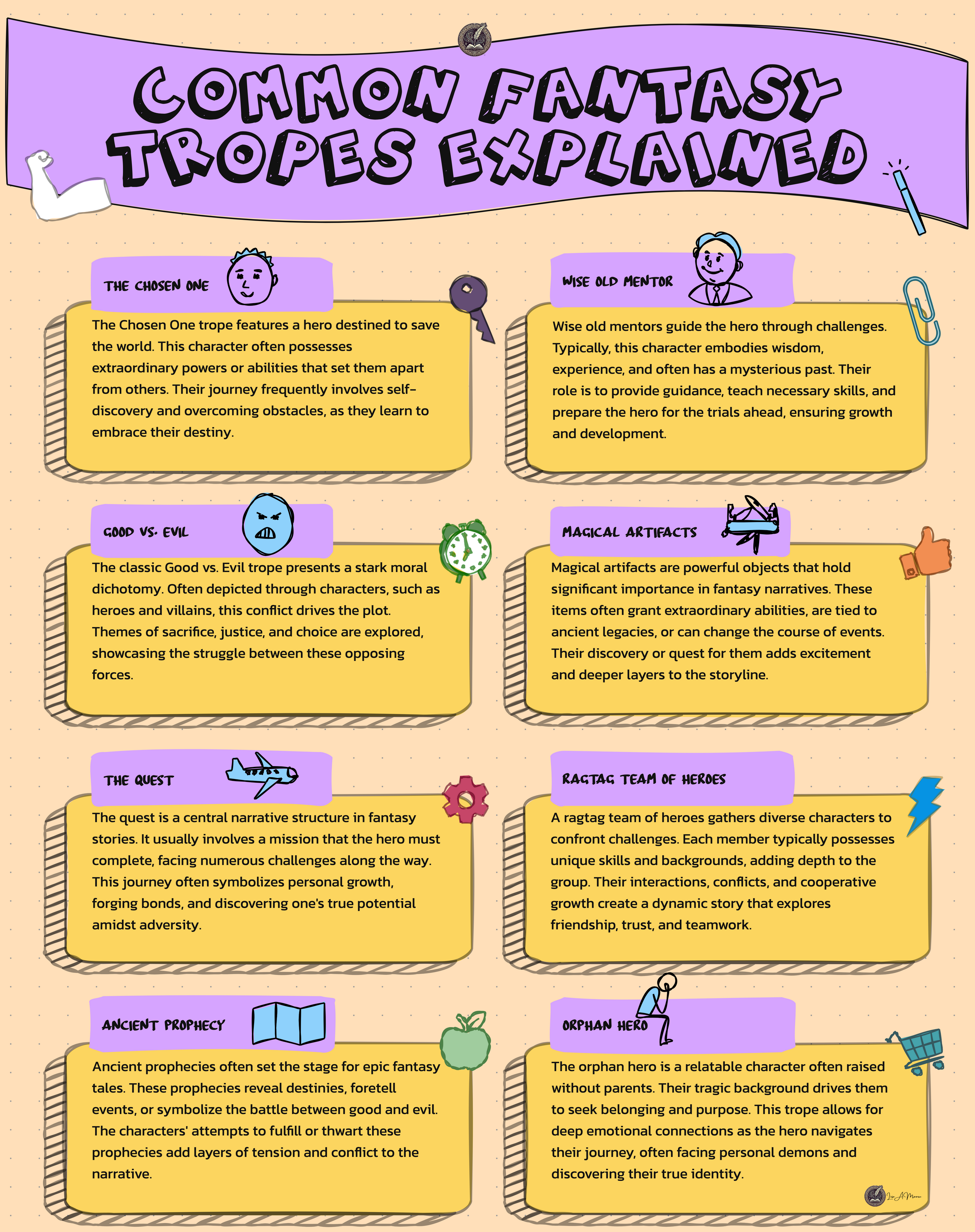
List 3 tropes from your chosen subgenre that you'll use (and 1 you'll subvert)





© 2025 Lisa A. Moore. All rights reserved.