
Featured News
As Seen in the News
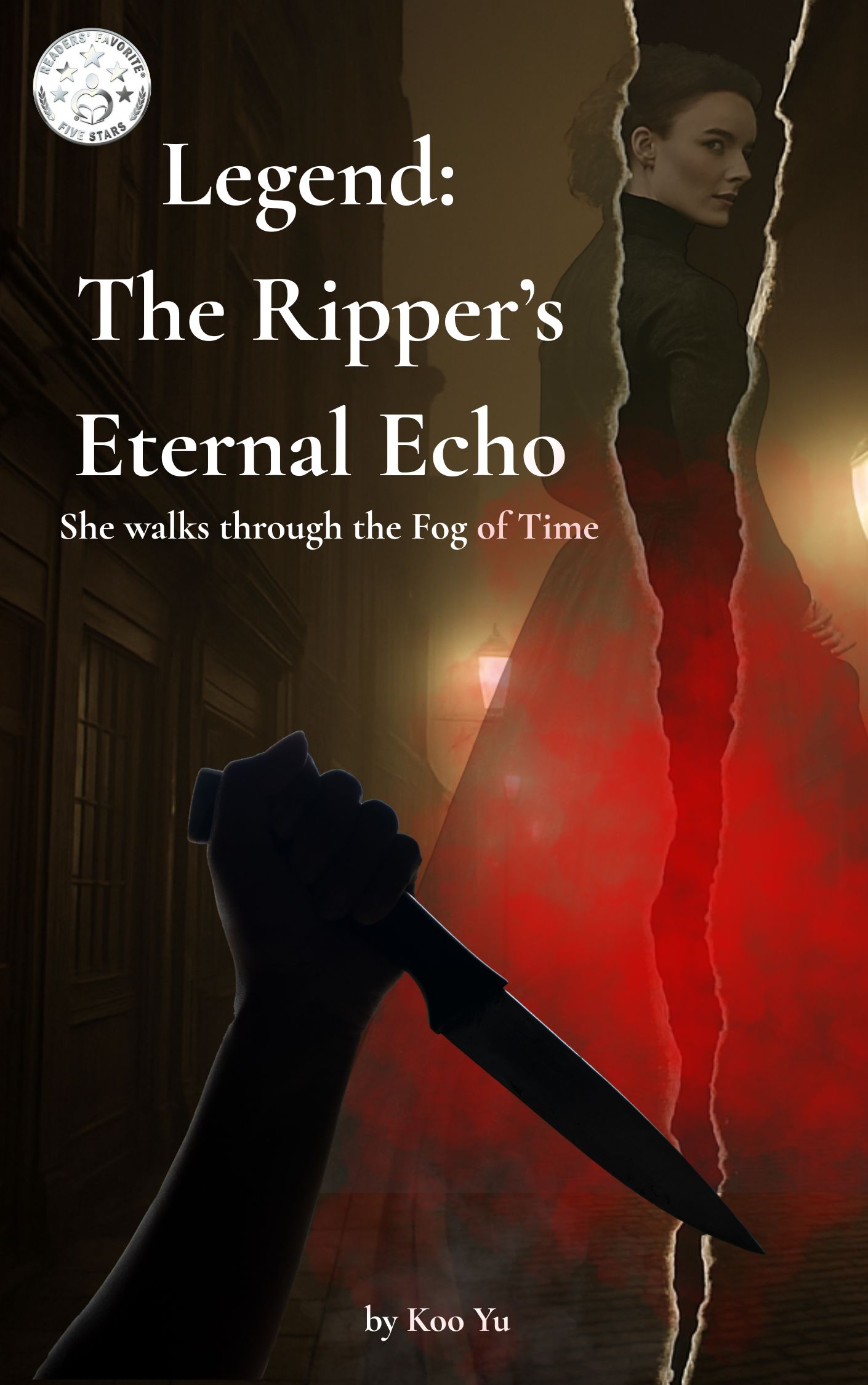
Legend: The Ripper’s Eternal Echo has been featured across 400+ news outlets following its professional 5-star rating from Readers' Favorite.


A Glimpse Into the Hunt
Official Trailers & Story Clips
Short cinematic clips from Legend: The Ripper’s Eternal Echo.
A killer walks London. Someone has been waiting 4,000 years.
Enter the Fog.
Unravel the Mystery.
Step into a world of crime, mystery, and timeless secrets with the Legend series by Koo Yu. Perfect for readers who enjoy atmospheric investigations, immortal detectives, and stories that connect past and present.

Sign up to receive your first clue
Sign up to receive updates, behind-the-scenes notes, and news about upcoming releases.
ABOUT THE AUTHOR
Koo Yu
Koo Yu writes dark historical crime fiction shaped by a lifelong fascination with mystery and justice. Drawing on the spirit of wuxia heroes and the works of Jin Yong, she creates strong female leads who move through the world with precision, discipline, and quiet strength.
Her novel Legend: The Ripper’s Eternal Echo follows Finn Parker, an immortal investigator who crosses centuries in pursuit of truth. From modern Nordholm to the fog of 1888 Whitechapel, Finn uncovers patterns others fail to see and confronts the shadows they avoid.
When she is not writing, Koo Yu is a marathoner and trail runner who understands that every long climb begins with a single step.
Connect on X: @kooyuu_writer
Fragments of thought, reflections, and quiet updates from the world of Legend.
Letters from the Fog
Latest Letter, March 2026 Letter
London in 1888 was not one city
February 2026 Letter
The Kill Zone: A Refined Beginning
January 2026 Letter
December 2025 Letter
Legend: The Ripper’s Eternal Echo
Review Sign Up and Exclusive Excerpt
Chapter One: Me
Chapter One
Finn Parker often thought of herself as an ordinary person who had simply wandered too long through the world. Four thousand years, to be precise.
She lived in the modern city of Nordholm now, moving quietly through the city’s days. In reality, her metabolism had been frozen in time since 2600 BC, when she was already nearing thirty-four years old. She did not experience aging, sickness, or death. She had lived through the rise and fall of five hundred human lifespans without the distractions of a normal life.
She possessed the wisdom of four millennia and a mastery of martial arts that modern people considered folklore. She still enjoyed the sensation of scaling rooftops and leaping from one lamppost to another. She knew that she could shatter a brick wall with a single, precise gesture. In the ancient past, internal energy and lightness skills were common disciplines. By the eighteenth century, they had become myths. To Finn, they were simply her nature.
Her only companion in this long fate was a man named Wayne. They had been bound to eternity by a choice made in the distant past. They rarely met, choosing instead to exchange new identities and news every thirty years. It was a ritual of remembrance in a world that always forgot them.
Finn was a recluse who hid in the busiest places. She understood the cycles of humanity, the patterns of greed, manipulation, and violence that repeated in every century. Her longevity allowed her to see the truth behind the events that others called history.
One of those cycles had occurred in London, 1888.
Finn sat in her study and closed her eyes. The modern sounds of Nordholm faded. In her mind, the fog of the past began to roll in. A vision flickered through her thoughts. She saw a man in a dark wool overcoat, his shirt crisp beneath a high collar, and a wide cravat tied at his chest. His polished boots caught the faint shimmer of fog. From the riverbank, he fell into the freezing water. Gaslight stretched long through the mist, outlining a solitary, resolute figure before the swirling current swallowed him whole.
It was not an illusion, but a memory.
The story did not begin in the present. It began in the shadows of the nineteenth century, where a city’s terror was just the opening move.
***
November 1888
Every headline in London shouted the same name, Jack the Ripper had returned.
Yet Finn was in a Mayfair studio, studying oil painting under an instructor from the Royal Academy of Arts. The light was gentle, the model silent in her pose, and the students worked in still concentration, layering color and texture across the canvases. Coal burned quietly in the hearth. The air smelled faintly of oil and plaster. From outside came the rhythm of hooves and carriage wheels on cobblestones.
Life in Mayfair was peaceful and proper. Her maid attended faithfully to her attire and coiffure, ensuring she appeared graceful at every gathering. For Finn, this was only a brief pause in a span of time far longer than anyone could imagine. Her friends, ladies of wealth, cared more about who had danced with whom or which department store had released a new ribbon. The murders in the East End were distant, unpleasant gossip.
During the studio’s break, Finn and the others chatted with the model, Annette, who had long posed for artists and was well known to them. When one student, David, remembered she lived in Whitechapel, he asked lightly, “Do you still dare to go out at night?”
Annette stiffened, her voice low. “We hardly go out even in daylight. It’s frightening. If your carriage hadn’t come for me, I wouldn’t have dared come here at all.”
“Why?” another naïve student asked.
David sighed. “You haven’t heard? Jack the Ripper.”
He began to recount the reports, the name, the victims, the horror of their deaths. Faces around the room paled. Some made nervous jokes to ease Annette’s fear.
It was the first time Finn had heard the name spoken aloud. In that glittering, perfumed world, the tale felt almost unreal.
***
That evening she returned to her Mayfair apartment.
The parlor was spacious, the fire alive in the grate. White panels with carved borders glowed beneath the light of silver candelabras. Heavy curtains shut out the streetlamps, and shelves lined the walls, filled with art volumes and travel journals. Velvet cushions softened the sofas; the candlelight shimmered across the room, calm and warm.
Emily sat nearby, reading a book of verse. When she looked up, her tone carried its usual gentle humor. “Was the studio pleasant today? And tomorrow, shall we visit Lady Mary? She sent a special invitation.”
Finn smiled faintly. “Perhaps.”
Emily was the landlord’s granddaughter. Orphaned young after her parents met with an accident while travelling, she had lived with her grandparents ever since. Her younger brother remained in their care, still attending school.
When Finn’s solicitor arranged the lease, the owners hesitated upon learning that the tenant was an unmarried woman. Only after he offered to pay a higher rent, three years in advance, and guaranteed her respectability as the daughter of a long-standing client did they consent. Still, they worried about propriety, and so Emily was asked to live with her “as a companion.” It gave the girl occupation and lent Finn social respectability.
The family held considerable property in London. Through Emily, Finn had met many of the city’s notables. The girl was studying at a ladies’ college and loved poetry and art; they had grown close quickly.
Finn’s maid, Jessica, had already prepared tea and a nightgown before quietly retreating. She was now kneeling by the hearth, arranging firewood, the glow touching her young but cautious face. None of them knew what stayed in her mind: the image of Annette’s frightened eyes, and the murders that stained the news.
That season’s fog was heavier than usual, pressing over the city as if it meant to swallow it whole. Between the suffocating routine and the reports of women killed in the streets, a restlessness began to stir within her. Emily, unaware, continued to chatter about which classmate had bought a new gown.
Finn decided to return to an old habit, investigation. Perhaps she could learn more about this killer.
Seated alone on the sofa, she thought: Where should I begin?
Annette came to mind. Since she lived in Whitechapel, she might know something others overlooked. Finn would not see her again until the next class, but tomorrow she could visit the library first, to read about this “Ripper.” Then another thought followed, Emily’s uncle, Paul Ashworth, was a journalist. Through him, she might hear the truth.
Finn glanced at Emily, still absorbed in her poetry. “Emily,” she said casually, “you mentioned that your uncle Paul is a reporter, didn’t you? Would you ask if he might join us for lunch? There are a few things I’d like to ask him.”
Emily did not question why. Her eyes glinted with amusement, and she nodded. She had long grown used to Finn’s peculiarities, her disinterest in social gossip, her long hours with books not all considered proper reading for a lady. Both Emily and Jessica had learned to accept it. They were, in their way, her most loyal companions.
The next morning, Finn declined Emily’s invitation for a walk. After reminding her to arrange the luncheon, she set out alone for the library.
It was a respected public reading room in London’s West End. Pale daylight filtered through arched windows. Gas lamps glowed against the fog-stained walls, their light dim and flickering.
The hall was hushed but not empty. Rows of wooden tables stretched beneath the high ceiling. The air smelled of paper and coal smoke. Men murmured over the latest editions, pages rustled, pens scratched faintly across paper. From one corner came a low voice: “Another one.” Others grumbled about the editors’ exaggerations.
Finn walked to the newspaper stand and took The Times and The Star.
The headline read:
“Another Whitechapel Murder: After a Month of Silence, Jack the Ripper Strikes Again.”
The Times was restrained, listing the victim’s name, age, and manner of death with grim precision, followed by details of earlier cases.
The Star was fevered, almost gleeful:
“The killer moves through the fog like a phantom, his blade flashing with madness, turning the East End into hell itself!”
The newest victim had died the previous night. The article compared her to the others, Nichols, Chapman, Stride, Eddowes. All were prostitutes, throats cut, bodies mutilated. But Kelly, only twenty-five, had been killed in her own room, her body dismembered beyond recognition.
Finn’s fingertips brushed ink across the page before she realized she had stopped breathing. Kelly had not died in the street.
In the records room she asked an attendant to bring bound newspaper volumes. He handed her a heavy leather tome, warning, “Careful, the paper is fragile.”
She sat and opened the yellowed pages, noting key details in her notebook. Soon she saw how accounts contradicted one another. A thin, unkempt man with tangled hair. A tall, well-dressed gentleman seen nearby. An immigrant. Each report carried its own prejudice.
This was no mere confusion. It was a web of contradictions, deliberately woven to blur the truth.
Closing the notebook, she knew she could no longer rely on the papers.
As she returned the volume, two men whispered nearby: “They say the police got a letter from the killer, with blood on it. No one knows if it’s real.”
Finn listened without turning. If it was true, then the murderer wanted more than death, he wanted to manipulate fear itself. These reports, she thought, were part of the fog he had made, concealing his real shadow within it.
***
When Finn came home, Emily was already dressed and waiting in the parlor, a folded letter in her hand and a mischievous spark in her eyes.
“I’ve arranged it,” she said. “Lunch at the Crown.” A blush rose on her cheeks. “Uncle Paul asked why I wanted to meet, so I told him I needed advice about women’s employment.”
Finn laughed softly. “Am I the one seeking work, then?”
Emily made a playful face. “Of course not. Grandfather always said our tenant is comfortably wealthy. I’ll just claim I’m considering a career.”
Her tone was teasing, but Finn felt a quiet warmth. She reached out, briefly drew the girl into an affectionate half-embrace, and murmured, “Thank you.”
After a pause she added honestly, “Yesterday at the studio they spoke about the Whitechapel murders. The killer has even been given a name, Jack the Ripper. Since Annette lives there, I’d like to know more.”
Emily’s expression grew serious. “Then you went to the library today, to read about it?”
Finn nodded. Her perceptiveness never failed to impress.
Emily thought for a moment, then smiled suddenly. “I know how to tell Uncle Paul. If you mention you’re interested in the murders, it might sound odd. But he already knows I’m curious about journalism. I’ll say I want to learn how reporters follow such a story, and you’re joining me as a friend for advice. That will sound perfectly natural.”
Finn couldn’t help but smile. “You’ve planned it well.”
Emily lifted her chin with mock pride, looking like a small general pleased with her strategy.
A carriage stopped outside. Emily and Finn climbed in together, the hooves ringing briskly against the stones as they rode toward the Crown in the West End.
The restaurant stood near Fleet Street, close to the offices of newspapers and law firms, a place favored by reporters and barristers. Inside, the noon rush had begun: waiters in white shirts and black vests moved between tables with trays of meat pies, beer, and steaming lamb stew. The air was thick with talk, tobacco, and the rustle of newspapers.
Paul was already waiting by the window. Around forty, with slightly disordered dark brown hair and a black coat worn at the edges, he kept a notebook open beside him as if unwilling to part from it even at meals. He rose when they entered, serious yet kind, his expression softening when he looked at Emily.
“Finn, this is my uncle, Paul,” Emily said.
“We met briefly in the street last month,” Finn said, offering her hand. “It’s a pleasure to meet properly.”
His grip was firm, the palm roughened by years of writing. “You’re quite well-known in our family,” he said with a wry smile.
He came from a distinguished family and was respected within the profession. He had chosen journalism over comfort, building his career through quiet persistence rather than privilege. The independence and defiance showed in his tired but steady eyes.
Turning back to Emily, he asked, “So you want to talk about women’s employment?”
Emily blinked playfully but answered with composure. “Yes, Uncle. I’ve always been curious about the newspaper world, but I don’t know if women can truly find a place there. I’d like your advice.”
Paul’s lips curved with quiet amusement. He did not expose her pretext. Instead, he gestured for them to sit.
A waiter brought beer and menus. Once their orders were placed, Paul thumbed through his notebook and spoke in a low tone. “If you want to understand how a reporter hunts for stories, the most difficult one right now is the Whitechapel murders.”
Emily feigned surprise and glanced at Finn, eyes bright with confirmation. “That case fascinates me,” she said. “How would a reporter even begin?”
Paul adjusted his spectacles, his tone turning grave. “We’re always in a tug-of-war with the police. They want to keep the panic down, while we must print the truth, however ugly. The city’s already terrified. Some papers have even received letters from someone claiming to be the killer. He signed them Jack the Ripper.”
Finn spoke quietly. “Those letters are real?”
Paul’s gaze sharpened. “One of them came with a piece of kidney. The police denied it, but I’ve seen the report myself. Whether it’s genuine or not, it shows that the killer wants more than blood. He wants control, over the city’s fear.”
Finn drew a slow breath. The contradictions she had noted in the papers now made sense. Someone was weaving the confusion deliberately.
Emily asked lightly, “And if a reporter were to pursue the story, how would they do it?”
Paul’s eyes lingered on her. “You start with sources. Printed news is never enough. You need to speak to officers, witnesses, even the victims’ acquaintances, anyone close to the truth.”
He took a drink, weariness flickering behind his gaze. “But the police despise reporters, especially in this case. They’re afraid of exposure. They’ll tell us as little as they can.”
Finn said softly, “Then you rely on…informants?”
A thin smile crossed his face. “Exactly. If you’re lucky, you find a constable willing to talk. Luckier still, a street informant. They’ll sell you anything for a coin.”
Emily nodded thoughtfully, then asked in an innocent tone, “And have you met such people?”
Paul closed his notebook, fingers tapping its cover. “There’s one man, O’Leary. Irish, fond of drink, half his stories worthless, but sometimes he knows things no one else does. He said he saw a well-dressed gentleman near Dorset Street the night before the last murder.”
Finn felt a faint tremor of recognition. The detail matched what she had noticed in the conflicting accounts.
Paul leaned back slightly, half-smiling. “If you truly wish to chase this story, find O’Leary. He works the Spitalfields Market by day, hauling goods, and spends his evenings drunk in the taverns nearby.”
The waiter returned with their meals, breaking the tension. Knives and forks clinked softly. Emily kept her composure, but Finn saw the glance she stole toward her, knowing exactly what she was thinking.
“Do all reporters have their own informants?” Emily asked.
Paul shook his head. “If only. Most informants talk to whoever pays or protects them. This trade runs on risk and nerve. Sometimes buying a drunk a pint earns you a fragment of truth.”
His gaze drifted to the window, the lamplight catching the fatigue in his face. “But there are no true friends on the streets. Every smile can turn into a knife. Whitechapel is no exception.”
Emily swallowed. “It sounds even more dangerous than I imagined.”
Finn glanced at her but said nothing.
Paul turned back, his voice lighter. “So, do you still want to be a reporter? You might begin as a contributor, perhaps write a few trial pieces.”
Emily laughed softly. “Let me think about it.”
He smiled, though his final words were edged with warning. “Even for a man, walking those streets alone is risky. Remember this, news is not poetry. It drags people into the mud, not the garden. For women, that danger is doubled.”
When lunch ended, they stepped out into the wind. The cold slipped down their collars. Emily shivered, then looked at Finn and asked quietly, “Will you go find that man?”
Finn did not answer. She simply took Emily’s hand, and together they walked toward the waiting carriage.
The hunt continues...
You have just read the opening of Legend: The Ripper's Eternal Echo.
To find out who is really behind the Whitechapel murders, and to see how an immortal survives a duel with a serial killer, get your copy now.
Blurb
Legend: The Ripper's Eternal Echo
London, 1888. Fog drifts through the alleys of Whitechapel as fear grips the city. Amid the chaos, Finn Parker walks quietly through the centuries, a woman whose life defies time itself. Her past is hidden, her purpose uncertain, until the Ripper murders awaken something long buried within her.
Drawn into the investigation, Finn finds uneasy allies in Emily Ashcroft and journalist Paul Ashcroft. Together they uncover threads of cruelty and corruption that reach far beyond the streets. Every revelation forces Finn to confront not only the darkness of others but the weight of her own enduring memory. Justice and guilt blur, and the line between witness and accomplice begins to fade.
The Ripper’s Eternal Echo is a gothic mystery of discipline and memory, exploring how even immortality cannot shield the soul from consequence. In the mist of London, the past never dies. It only waits to be found.
Reach Out from the Fog
Got a theory about Finn’s past? Want to share your favorite twist? Or just say hello?
Send me a message. Whether it’s a clue, a thought, or a mystery of your own, I read every note.





© 2025 Legend Series by Koo Yu. All Rights Reserved.
