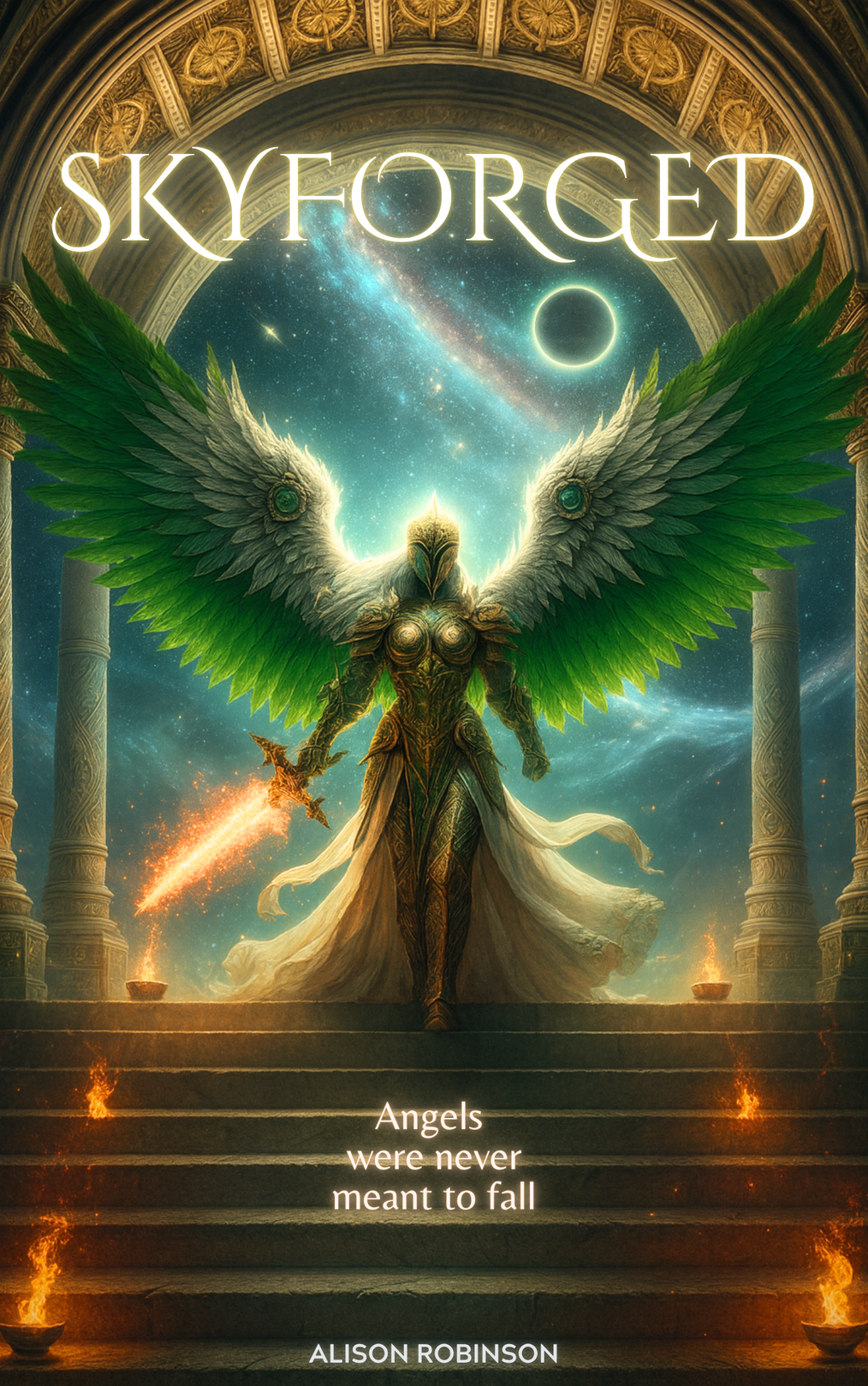
A secret that could unmake the Heavens.
A love that was never meant to rise.
And a judgement that will shatter the skies.
WELCOME TO BOOK ONE
OF THE SKYFORGED SAGA.


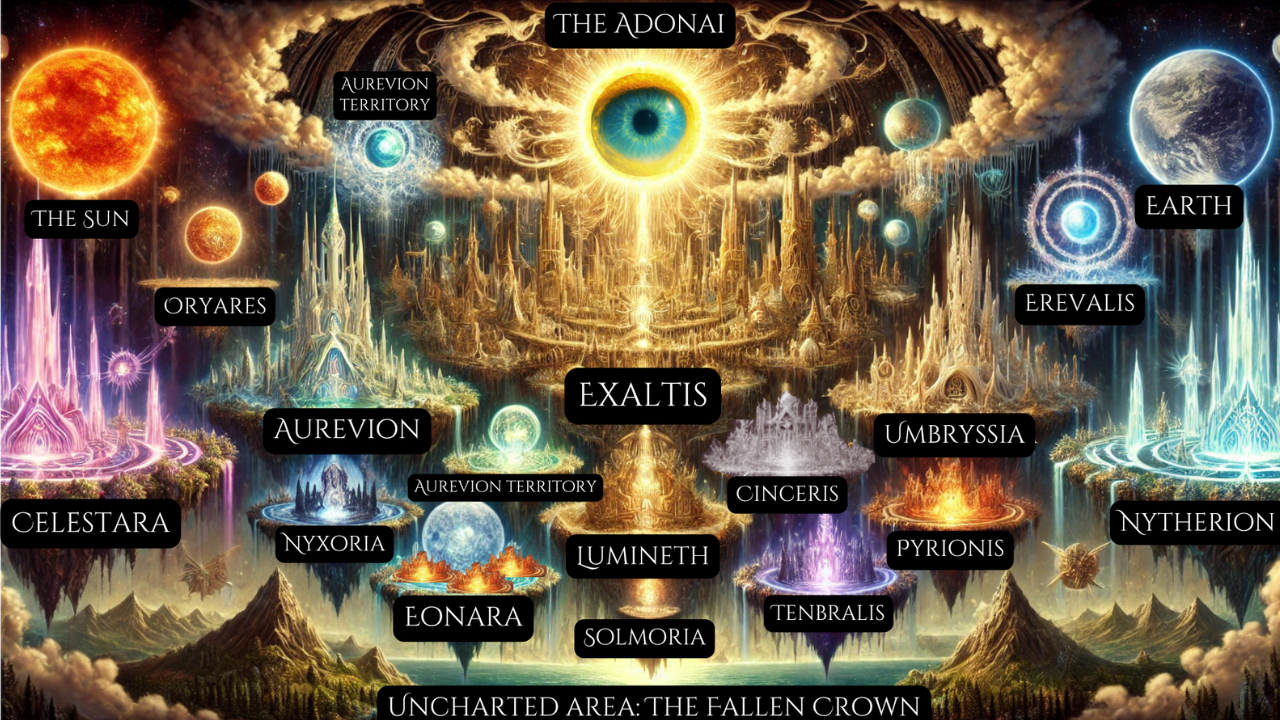
Caelith, an idealistic 37-year-old Yale scholar with a gift for unraveling hidden truths, is one of fifty-seven human initiates struck twice by lightning and thrust into the Heavens—a vast multiverse of eleven celestial realms ruled by angels forged from light, law, and terrifying beauty.
The initiates’ purpose is clear: in the midst of a rising celestial war, they are to judge the Watchers—fallen angels whose defiance shattered the Heavens.
But before Caelith can wield judgment, she must survive the Skyforged Trials: three brutal, awe-striking rites that break the body, reshape the soul, and bind power to the bone. In the Trials, survival is anything but promised. But those who are strong enough to endure will be remade—and ascend as the Skyforged—elite angels sculpted for power, judgement, protection, and ruin.
Amid the pressure of the Trials, the threat of death, and the looming responsibility of ascension, Caelith finds herself drawn to one of her fellow initiates—a brilliant, volatile man whose light is as fractured as her own. Their connection is undeniable… and forbidden. For in the Heavens, desire is a sin, intimacy a weakness, and angels are forged through obedience. Wanting him may be the one thing that destroys them both.
And ruinous longing isn't the only truth rising from the ashes. As ancient truths buried for millennia begin come to light, Caelith realizes the greatest lie may be the same one she is being forged to uphold.
Sarah J. Maas meets Brandon Sanderson in this sweeping, slow-burn romantasy where love is forbidden, balance is power, and the fate of the skies rests in the hands of a woman who was never meant to survive.
To uncover the truth, Caelith must choose: endure and remain a weapon of blind judgment, risk everything for a love that could unmake them both—or set the skies ablaze.
Skyforged is an adult epic romantasy that blends lush, addictive storytelling with sweeping, cinematic worldbuilding—crafted for readers who crave fierce heroines, high-stakes and consequential danger, forbidden longing, devastating slow-burn tension, and high fantasy that feels like falling in love with an entire universe. Once you step into the world of Skyforged, you'll understand—the awe of epic fantasy and the ache of a love powerful enough to shatter kingdoms—CAN exist on the same page.
Need more info about Skyforged perks?
JOIN THE SKYFORGED LEGION
Join now and step into the world of Skyforged before anyone else!
When you sign up with your email today, you’ll become one of the FIRST people on earth to know the moment Skyforged is greenlit for printing — before the announcement goes public.
And as my thank-you for being part of this journey from the beginning, you will receive:
✨INSTANT Access To:
The first 7 chapters of Skyforged delivered to your inbox TODAY — long before publication.
✨Priority Notifications Directly from the Author:
You'll be the FIRST to hear about exciting Skyforged developments...when a literary agent is secured, when a publisher is secured, when the author is having their next event, etc.
✨Exclusive Virtual Access to An Evening Forged in Light:
On December 30, 2025 from 6-9 pm MST, I will be hosting my FIRST live event...An Evening Forged in Light. This is the night the Skyforged fandom begins.
You'll get exclusive excerpts, behind-the-scenes revelations, live readings, priority placement to participate in a themed raffle, and access to the author in an unforgettable, cinematic atmosphere.
If you want bragging rights forever — this is the night you won't want to miss.
✨ Exclusive Preorder Access:
Unlike everyone else, you’ll get a private preorder link IMMEDIATLEY when Skyforged enters production — before bookstores, before Amazon, before anyone else.
✨ Guaranteed Early Delivery:
Once you pre-order, your copy will ship before Skyforged hits shelves, ensuring you’re among the FIRST to read it.
✨ Included with Your Pre-Order...a SIGNED Copy:
As a thank you for supporting Skyforged's journey and completing your pre-order, you will receive an exclusive, SIGNED, early-edition copy — reserved only for the Skyforged Legion.
WANT TO HELP THE AUTHOR EVEN MORE?
Donate now the Skyforged Social Media Manager Fund!
Because we all know, you can write the best story know to mankind, but it still won't reach it's potential without the RIGHT team spreading the message!
MEET THE CHARACTERS
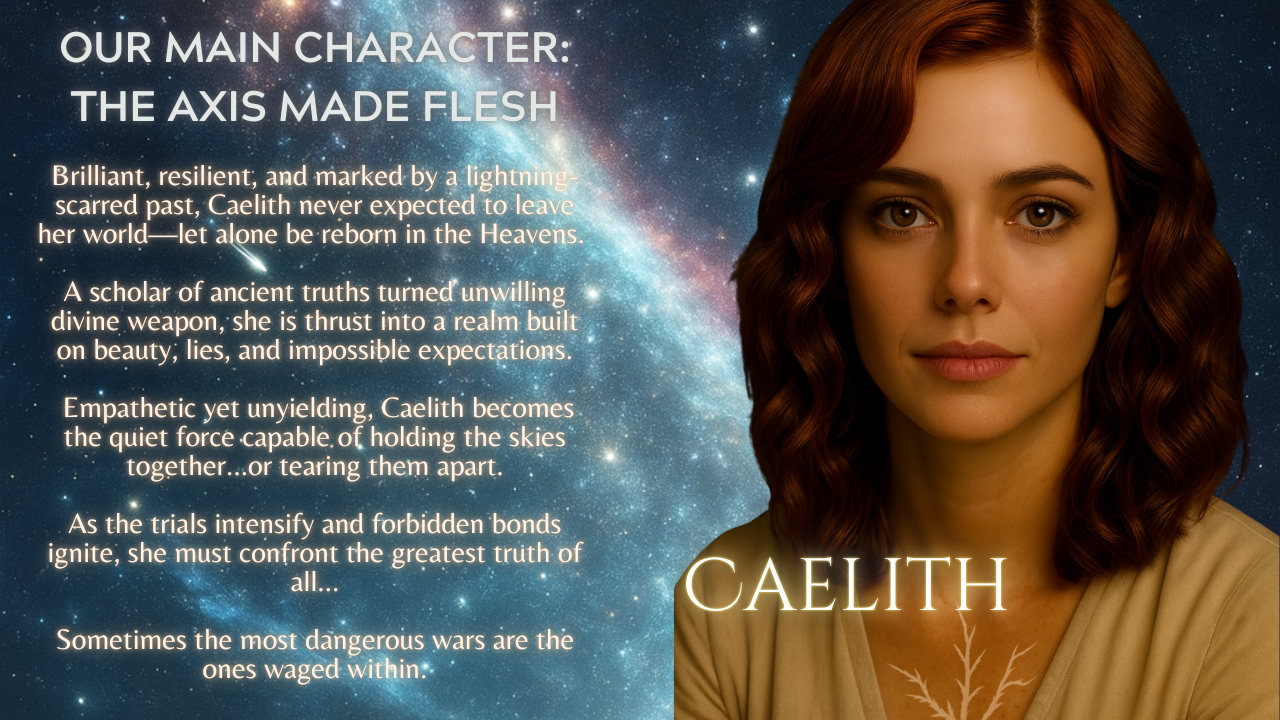
CAELITH - The Axis Made Flesh
Marked by lightning and forged by loss, Caelith carries a power she never asked for—and a heart the Heavens will try, and fail, to break.
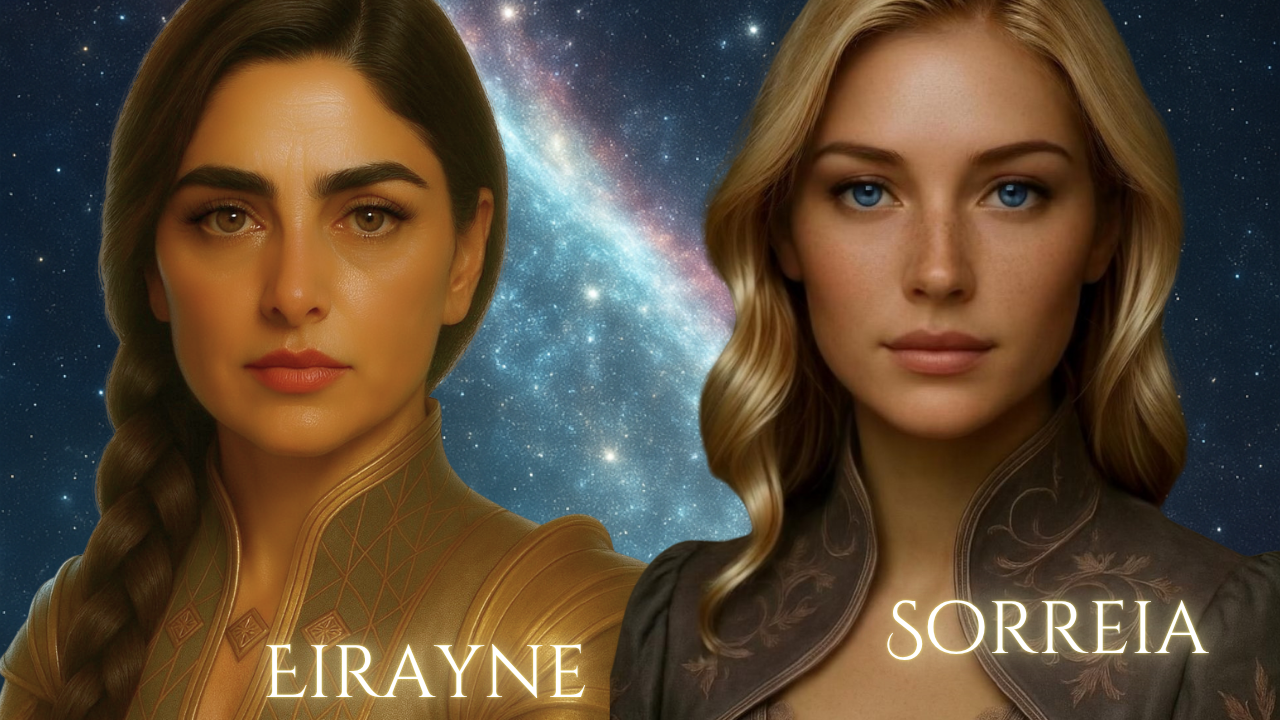
EIRAYNE — The Unbroken Law
Cold logic is her armor; silence is her sanctuary. But beneath her precision lies a wound she refuses to name—and a longing for peace she fears she can never earn.
SORREIA — The Velvet Blade
Sweetness on the surface. Steel underneath. This woman was trained to be a prize, but instead, she sharpened her elegance into a weapon. She’ll comfort you with a smile… while deciding exactly where to place the knife.
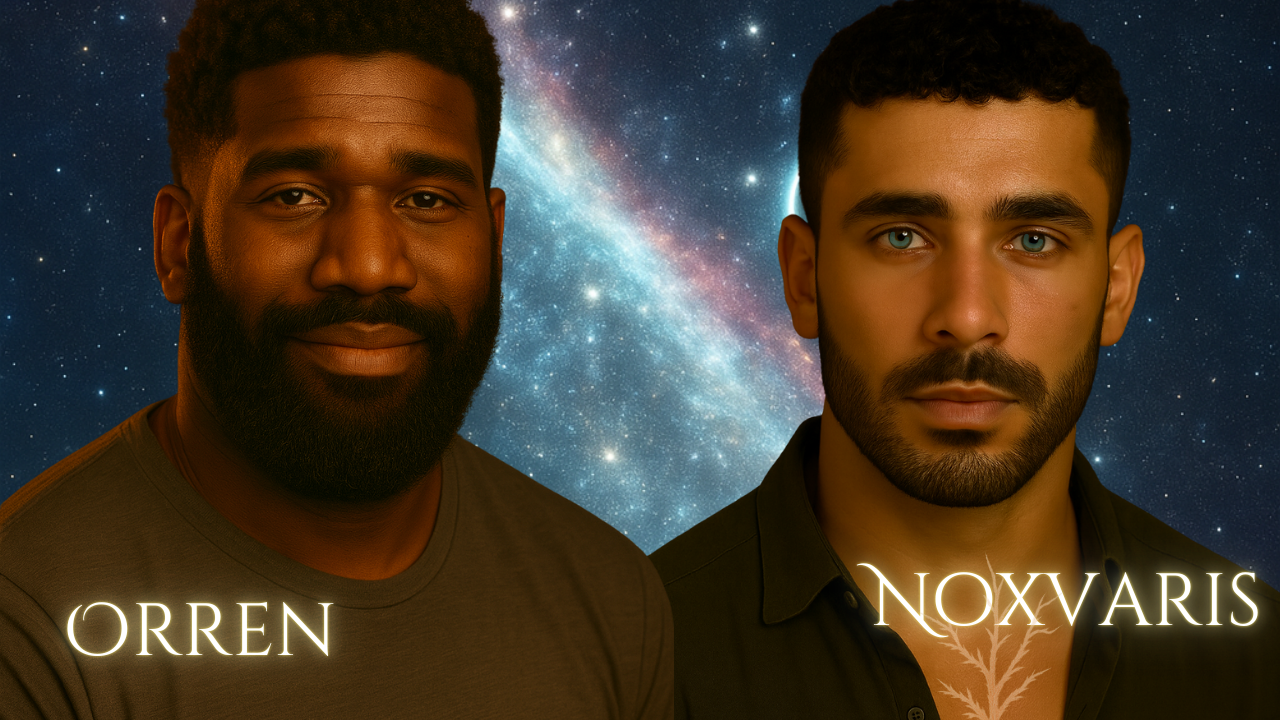
ORREN — The Ember Shield
Steadfast and disciplined, he is the quiet warmth at the center of the initiates—a man whose humor arrives softly, right when everyone needs it most. But behind every smile is the weight of honor, and ghosts he hasn’t yet learned to outrun.
Noxvaris — The Fallen Star
Beautiful, volatile, and impossible to look away from, this man forged for greatness—only to be undone by the weight of it. To Caelith, he becomes danger wrapped in longing… a love written in the dark, the one touch she should refuse, and the truth she was never meant to want.
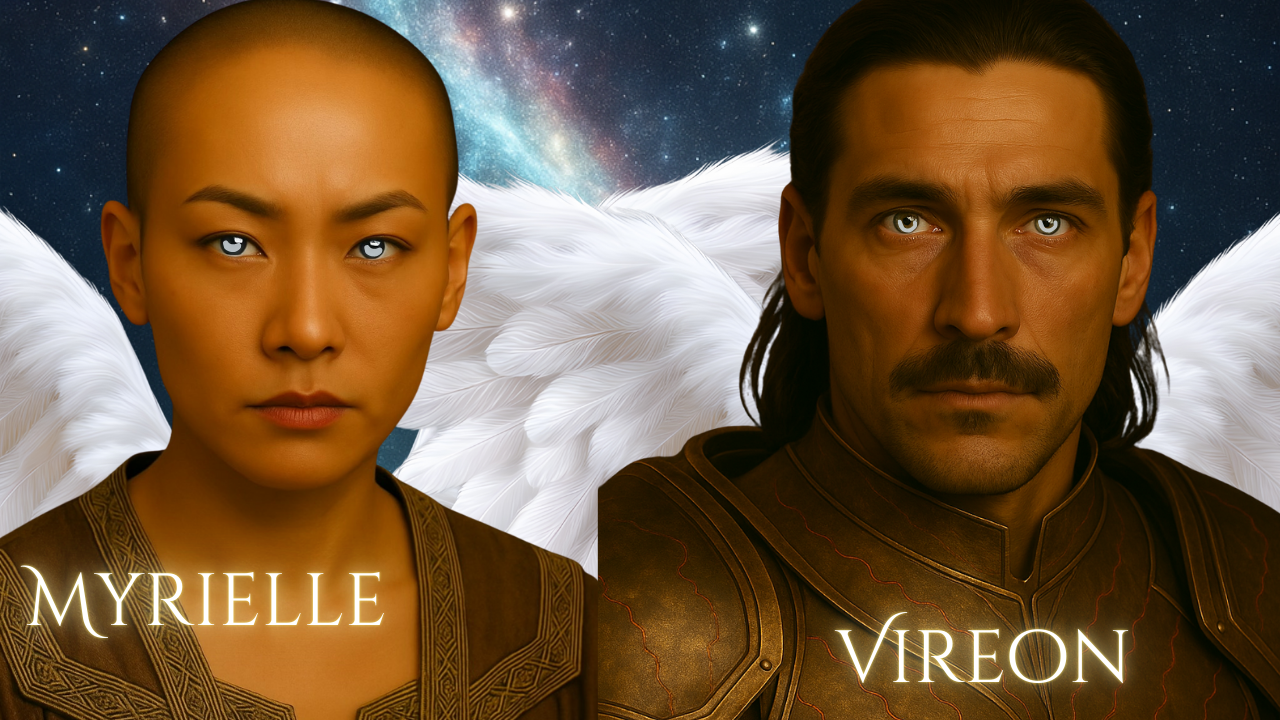
Myrielle — The Witness
Still as a cathedral and sharp as a verdict, Myrielle sees truth with a clarity that cuts. To Caelith, she is not a guide but a mirror—unyielding, unimpressed, and merciless in her reminder that curiosity is not the same as understanding.
Vireon — The Wrath
A living furnace of judgment, Vireon burns with a fury sharpened into purpose. To Caelith, he is no protector—he is the flame that tests, scorches, and strikes, convinced that breaking her is the only way to keep Heavens whole.
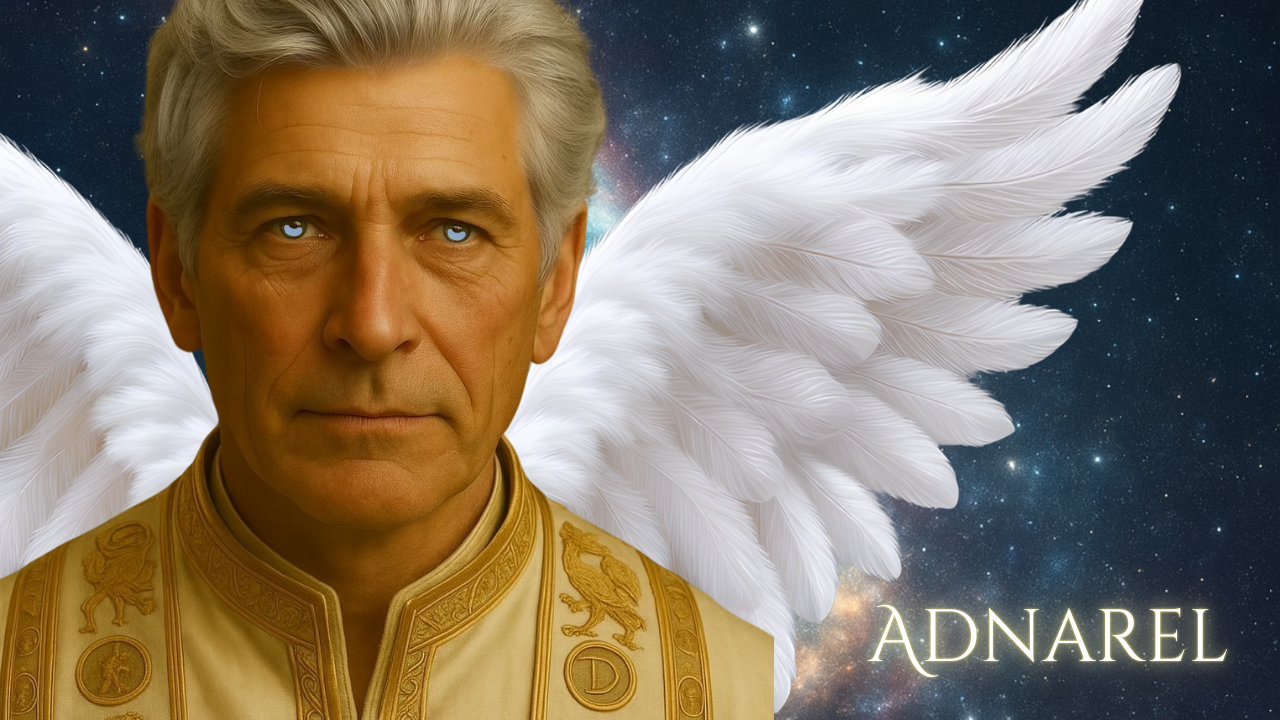
Adnarel — The Imperiant
Serenity wrapped around control, he is a leader whose warmth feels like truth—until it doesn’t. To Caelith, he is mentor, compass, and calm… all while quietly shaping her into the weapon he believes he owns.
Thanks for still being here!
As a special treat, here's Chapter 1. No email required!
CHAPTER 1
When the realms fracture,
And the stars bleed.
When fire devours both flesh and stone,
And light turns its face from the ruin of creation.
When all glory and the last shield falls, they shall rise—
Marked by the tempest of the Earth,
And the silent shreds of a sundered world,
They alone shall forge the skies anew.
The cold seeped through my full-length coat and clung to my skin like unseen fingers. For early May, the morning air was sharper than it had any right to be. Overhead, the sun still held its place—for now. But from the horizon came a low, rolling tremor, distant yet undeniable, and shadows gathered in disciplined ranks. An army assembling into a slow and fated march, poised to lay siege upon the sky.
The storm was coming.
Its approach was both an old friend and a ruthless adversary—familiar yet merciless, a memory carved too deeply to fade. I felt it long before I saw it, the same way I had felt every storm for the past twenty-nine years. I was eight at the time of the accident; now, at thirty-seven, my body still remembered.
It always began in the same way: a whisper of pressure in the hollow of my throat, as if my breath had caught in shock. Then the slow, insidious spread, unfurling like a tide beneath my skin—vast and creeping. And after that, a branching bloom across my shoulders, a jagged network of sensation radiating just beneath my skin. My reaction was as inevitable as the storm itself.
The first pulse had arrived late last night—faint, shrouded. This morning, with the storm blackening the horizon, its weight was unmistakable. The sky felt as though it were holding its breath.
I inhaled slowly, my fingers drifting to the scar etched at the base of my throat. The pale, raised mark ran downward through the center of my chest before halting between my breasts—a ghost of the past, a tether I had never quite managed to sever. And now, as the storm gathered, its charge curled through the air and stirred something restless beneath my skin.
A deeper rumble tore through the sky—low, rolling, alive. The sound didn’t just shake the air; it reached inside me, coiling through my ribs, slipping between bone and sinew, one pulse answering another.
I flinched, my breath catching as I tucked my hands into my coat pockets, a futile attempt at grounding. The chill that licked up my spine wasn’t only from the morning air.
I had spent decades feeling storms before they came, had long ago learned the rhythm of their warnings—the subtle escalation, the prickle along my nerves, the sense of being watched from above. But this was different. The pressure didn’t just herald rain. It crawled through me, slow and deliberate, tightening around the scar below my throat like a closing fist. In that moment, it wasn’t only the past reaching for me.
The storm was reaching too.
I exhaled sharply, forcing my hands to unclench.
It’s my nerves for tonight. It has to be.
But as another growl of thunder rolled through the sky, I wasn’t sure I believed myself.
I tightened my grip on the strap of my satchel and dragged my gaze from the clouds. Despite the looming storm, Yale’s Old Campus thrummed around me with purposeful energy, caught in the fever pitch of final exams and impending graduation. The air crackled with the charged hum of students and faculty weaving through the courtyards—papers clutched, voices low and resolute, footsteps quickened by ambition and sharpened by a hint of panic.
A gust of wind rushed through the courtyard, lifting the edges of my coat as I moved with the tide of bodies. On the horizon, the storm rumbled once more, low and expectant, as if it were waiting.
As I weaved my way through the tide of bodies, the Women’s Table rose into view ahead, its circular form cradling a shallow basin of water. The gentle cascade over its edge drew me in like a whisper—a constant, soothing sound that echoed the hush of distant rain. Water, cool and glistening, flowed from the center of the speckled gray stone and slipped in an unbroken sheet over the rim, into the pool of blue stone below.
I slowed, unable to pass without pausing. The ripple patterns were hypnotic, catching what little light the storm permitted and bending it into shifting bands. No matter how many times I saw them, I always felt a quiet awe for the spiral of numbers etched into the stone beneath the water—a record of history, each digit a name unspoken, a battle fought, a door forced open.
The numbers marked the women registered at Yale from its founding in 1701 to 1993, when the Table was completed. For the first 172 years, the spiral held only zeroes. Then, in 1873, the silence broke. One number, then another, then more—until the spiral expanded outward, carving a path toward the present, toward possibility. The past could be erased or rewritten in textbooks, but here, it was carved in stone and bathed in a constant fall of water.
As the water slipped away, unstoppable as the heavens pulling stars along their ancient paths, I thought about the women who came before me. I thought of the weight they carried, the battles fought behind closed doors, their quiet victories that paved the way for louder ones. To me, those numbers were more than statistics. They were proof that progress could be slow and brutal, but not stagnant.
I had never been one to turn away from history’s shadows. Had never been one to accept things as they were simply because they had always been that way. Justice, fairness, truth, preservation—these things mattered. They had always mattered, and they always would.
The scar on my chest prickled in response to another distant rumble. But I refused to let the past pull me under. Tonight, my work would speak for itself. Tonight, the patterns I had traced across texts and centuries would finally be heard.
I stepped away from the Table and continued toward Sterling Memorial Library.
Ahead, the library rose like a Gothic citadel of stone and shadow, where knowledge was not merely housed but revered. I had worked tirelessly for years to earn the right to enter. And every time I stood before those doors, I felt it: the centered certainty that I was exactly where I was meant to be.
The path that had led me here had been deliberate—often winding and unforgiving, but always forward. Step by step, I had carved my way through doubt, through long nights bent over ink-stained pages and the weight of languages long buried. This place—this sacred realm of scholarship—was not something I had stumbled into by luck or privilege. It was the culmination of my years spent threading myths and histories together, pulling meaning from fragments others had dismissed as coincidence. It was the relentless pursuit of voices lost to time, of connections waiting to be unearthed.
Columbia University had given me my first foothold in the tangled lineage of ancient stories. The University of Chicago had sharpened my skill, taught me to thread my way through Mesopotamian and Judaic texts, to see how stories bled into one another across time. But it was not degrees alone that had brought me here. It was my quiet rebellion of refusing to let the past be sterilized into theory. My stubborn conviction that there was beauty in the chaos of ancient worlds—and that someone had to fight to keep them from being forgotten.
My gaze drifted upward, tracing the details of the archway above—a methodical masterpiece that felt more like a portal to another realm than the entrance to a library. A Mesopotamian scholar was depicted at its center, his chiseled likeness flanked by cuneiform script—sharp angles carved into stone, a language of prayers, decrees, and dreams that had long since been whispered into dust.
I reached for the heavy wooden doors, the large, circular pull solid beneath my fingers. The deep brown oak bore decorative panels of vines and floral patterns, an ode to the library’s eternal growth. As I pulled, the door yielded with a low, resonant creak—a sound I had come to love, a familiar welcome into a world where I felt whole.
Stepping inside was like stepping into a different era. The scent of parchment, dust, and ink wrapped around me, the perfume of scholars long gone. Footsteps echoed softly across stone floors, mingling with the faint rustle of pages and the low murmur of voices. The storm outside felt distant here, its threat reduced to a muffled counterpoint under the library’s vaulted ceiling.
The main hall opened before me, vast and cathedral-like. Sunlight spilled through stained-glass windows, splintering into muted rainbows across the floor. The air was heavy with reverence, as though the building itself remembered every hand that had ever turned a page within it. To me, Sterling was more than a library. It was a temple of knowledge.
And I was a devout worshiper.
As I crossed the hall toward the stairwell that led to the third floor, a flicker of movement tugged at my attention. A student stood a few feet away, brows furrowed over a crumpled map of the library, rotating it in their hands like it might rearrange itself into something legible.
“First time here?” I asked gently.
Their head snapped up, relief chasing the confusion in their eyes. “Yes. I’m supposed to be meeting my group, but I think I got turned around.” They glanced down at the map with a wince. “This place is a maze.”
“It is,” I agreed. “But you’ll learn its ways soon enough. Where are you headed?”
“The Memorabilia Room,” they said, exhaling in defeat.
“Behind the Exhibit Corridor, across from Rare Manuscripts,” I said automatically. I adjusted my satchel and pointed. “Follow the hall straight back. Just before Circulation, turn right. Through the Exhibit Corridor, it’ll be on your left.”
Their shoulders sagged with visible relief. “Thanks—seriously. I was starting to think I’d be wandering around here forever.”
I huffed a quiet laugh. “There are worse fates.”
That got me a wide, genuine smile. “I’ll try to remember that.”
“Enjoy the library,” I said, already turning toward the stairs. “It’s a good place to get lost.”
My boots clicked softly against the stone as I climbed. The embellished banister under my right hand curled upward like the spine of some great beast, each carved detail as precise as the cuneiform over the entrance below. Six years ago, these stairs had winded me halfway up. Today, that version of me no longer existed.
Back then, I’d been raw from the degradation of my marriage, still carrying the weight of what I’d left behind in Chicago. Coming to Yale had meant walking away from a life I had spent years building, from a love I had fought too long to hold together.
But Yale and New Haven were more than a relocation. It was a homecoming. I’d grown up just twenty-seven miles away, in Middletown. In a house that smelled of candle wax and old books, where my grandfather taught me that knowledge was sacred and history a living thing. And it was always his voice that carried me through every hard decision.
When I stepped onto Yale’s campus as a doctoral candidate for the Yale Babylonian Collection, I’d felt it: not just the weight of my choices, but the weight of finally coming into myself… finally coming home.
That first year, I rebuilt from the inside out. I poured my grief into research and my pain into motion, taking up running before dawn and chasing the morning light through New Haven’s streets. I forged endurance where there had been none. And now, as I rounded the second-floor landing, my breath was steady, my muscles warm. No gasp, no stumble. Just forward momentum.
My right hand still gripped the railing as I continued my climb—steady, confident. My left hand hung loosely at my side. It always did. A silver-dollar-sized scar stretched across my palm, its raised edges another permanent reminder of the night of the accident. That hand had never been the same since the night of my accident. Its weakness wasn’t something I acknowledged often, but it was always there—a ghost in my own skin.
There were moments when frustration crept in, when I felt entitled to more, when I wanted to defy the restrictions that had been placed upon me. But over time, I had learned that strength wasn’t always about defiance. Sometimes, it was about adaptation. About recognizing your limits—not as failures, but as stepping stones. About finding ways to move forward, not in spite of them, but with them. I had accepted long ago that my weakness didn’t define me. If anything, it had shaped me into something stronger, crafting resilience where frailty had once threatened to take root.
By the time I reached the third floor, the familiar yellow-gray bricks and sleek green terrazzo stretched before me in a steady plane. Light filtered through stained glass, casting fragmented colors across all before me. The hush up here was different from the main hall below—thinner, more focused, attuned not to the hum of minds at work, but to the quiet crackle of discovery.
My boots tapped a soft rhythm on the terrazzo as I moved down the corridor toward the Yale Babylonian Collection. This wing had been built for permanence and preservation. Even so, I knew how easily history could still be lost.
I had made a vow long ago—not just to study the past, but to guard it. To keep forgotten words from slipping into the undercurrent, from dissolving into the oblivion of silence. To ensure that those who came before us weren’t reduced to footnotes, their voices not buried beneath the noise of today. For me, it was more than scholarship. It was a reckoning with time itself.
And I would not let time win.
As I rounded the corner, Ettalene Grice’s portrait met me as it always did. Black-and-white eyes, sharp and unsmiling, gaze fixed on some point beyond the photographer. The first woman to earn a Yale doctorate in Assyriology. Acting Curator of the Collection when the idea of a woman in such a position was nearly unthinkable.
They’d once said her mastery of Semitic languages was “very unusual, and in a woman, almost unique.” Meant as praise. Yet every time I read the words in the small plaque beneath her portrait, I heard the walls she’d had to break through just to stand where she had.
I slowed and dipped my head in a small nod—a silent acknowledgment, a private thank-you. Not just for what she had done, but for what she had endured to do it. I always found strength in the idea of her presence. Strength in what remained. Strength in what was still possible. Then I moved on, carrying the echo of her defiance with me.
The Yale Babylonian Collection stretched across rooms 318 to 327, a sanctuary of clay tablets, fragile scrolls, and the thin edges of histories nearly lost. But instead of going straight to my office, I veered toward Room 323. I’d left something behind last night that I would not face today without.
The door loomed before me, heavy oak, dark and imposing, with narrow windows set like watchful eyes near the top. The morning light spilled through them, painting fractured shadows on the terrazzo beneath my feet. The brass numbers on the door, 323, glowed faintly gold, worn smooth by time. Behind this door was centuries of history, debate, and discovery.
My right hand found the cool brass handle. My left curled loosely at my side, useless for this task. I pressed my shoulder into the wood, and pushed. The door shifted with a low groan, reluctantly opening just wide enough for me to peer inside.
I took a breath as I held the door open, and the hush settled over me immediately. A quiet so profound, it pressed against my senses.
I lingered there, half-hidden by the door, and listened.
Still nothing but silence. Just what I had hoped for.
I had caught the room in its most unnatural state: non-occupancy. The early hours of morning were the only time that Room 323, the Collection’s classroom, was ever truly silent.
I stepped inside as the door drifted shut behind me with a hushed sigh. A faint hiss escaped from above as the hydraulic mechanism took over, pulling the wood into its frame with a heavy thuh-thunk that reverberated into the floor with finality.
The classroom stretched out around a long wooden table ringed by chairs, their surfaces worn smooth by generations of scholars. Manuscripts lay unfurled across the table, trays of artifacts arranged like pieces of an unsolved puzzle. Magnifying glasses perched above them, waiting for hands to guide them. Whiteboards lined the walls, cluttered with Akkadian, Sumerian, Aramaic—this week’s lesson plan, written, debated, erased, rewritten.
The air carried the weight of history, but beneath that, something sharper lurked—an edge that prickled at my awareness, a reminder that very few viewed the past as I did.
To my colleagues, history was something to be dissected, stripped of sentiment, reduced to data points and footnotes. To them, the value of an artifact lay in its classification, not in its soul. A cuneiform tablet was a linguistic puzzle, not a whisper from another time. A scroll was a specimen to be cataloged, not a story waiting to be heard. They approached the past with precision, with calculation, with a clinical distance I could never bring myself to fully adopt.
This was my battleground. The space where my passion met their precision, when our arguments sharpened against one another like flint on steel. Where the debates between me and my colleagues were at their starkest. The only other witnesses to our clash were the ancient figures carved into the relief mural that stretched across the upper walls of the classroom. Frozen in time, their hands raised in supplication to gods whose names had been swallowed by the centuries.
I often wondered if they had known, back then, how easily even faith could be reinterpreted. If they had ever dreamed that one day, their likeness was fated to overhear scholars who spoke of them as if they were nothing more than fragments to be pieced together. If they knew that their gods would be reduced to annotations. And if they knew that, among all those measured voices of cold certainty, there would be one voice that carried fire.
This room was a war zone, yes—but it was also a place of learning. A place where students came to glimpse the mysteries we worked so tirelessly to unravel here at the Collection. A place where, despite the tension, I still believed history could be more than information to classify. That it could be a truth waiting to be remembered.
I had spent years among my colleagues, but in their presence, I still felt like a shadow at the edges of their world. Not because I wasn’t academically capable, but because I wasn’t willing to strip history of its soul. Where they sought to analyze, I sought to understand. Where they deconstructed, I absorbed. To me, history was not just something to be merely studied—it was something to be felt. A work of art, of longing, of voices aching to be heard.
My dissertation—The Veiled Heavens: A Comparative Study of Angelic Rebellion, Divine Judgment, and Lost Cosmologies in Ancient Religious Texts—had been the acceptable shape of an unacceptable obsession. A neutral framing, a careful map of patterns across civilizations, offered up in language my field would tolerate. They saw classification. I saw a pattern of erasure. Every time I presented my findings, if I pushed too far toward what lay in the gaps, I could feel their resistance. The grip of “acceptable discourse” closing like a vice.
But three months ago, I had defended that dissertation. Three months ago, I’d shed the title of student. I was a newly minted postdoctoral associate of the Yale Babylonian Collection.
And I no longer owed them my restraint. Nor my caution. And certainly not further proof of my worth.
My gaze skimmed the table, searching past stacks of notes and trays of tablets. And there—half-buried beneath an open folder—lay the worn leather cover of my copy of the Books of Enoch. My grandfather’s voice brushed the edge of my memory, as it always did when I saw it. Calling me back to the first time he’d put it in my hands. The way he’d once said, “Some stories refuse to stay buried.”
I slid the book free and tucked it carefully into my satchel.
The moment the cover disappeared beneath the flap, the stained-glass window at the far end of the room shimmered.
Not from sunlight. From something else.
The colors wavered, lines warping as if the air between us had rippled. My heart stuttered. Outside, the sky was still its flat, storm-dark gray. No sudden glare. No obvious reason.
I told myself there had to be an explanation. Heat. Blood sugar. Stress. Light refraction.
But a low rumble rolled through the sky, closer now. The sound found my scar, and tugged. A soft prickle skated over my skin, a static hum teasing the air around me. My pulse faltered—not in fear, but in maddening recognition.
I forced myself to turn away from the window. As I did, my eyes caught on the nearest white board—just a passing glance.
But what I saw stopped me dead in my tracks.
Tucked between a half-erased Akkadian verb table and a reminder to finalize next week’s lecture, a single phrase stood out. Written in my own hand. In my own ink.
“When the realms fracture, and the stars bleed…”
I stared at it, every nerve tightening, my breath slowing.
I hadn’t written that. Had I?
The classroom felt suspended, the air too still. I stepped closer, slowly, as though approaching a wild animal. The ink strokes were familiar, the angle of the letters undeniably mine. My mind scrambled for an explanation—old notes, an absent-minded scribble, some overlap of memory—
I blinked.
And the phrase was gone. In its place, a rough equation glared back at me. Something about temple chronology.
I swallowed, throat tight. Sleep deprivation. Overlap. A trick of the eye. Some half-formed thought dragged from a dream. That was all.
It had to be.
I drew a long breath through my nose, then released it. Conspicuous script didn’t matter. Tonight mattered. In just a few short hours, the classroom would be alive with debate for my seminar. There would be scrutiny. Inquiry. Opposition.
Tonight, I would present my work without apology, without softening its edges to fit anyone’s comfort. My work was going to be dragged into the light, and whether my colleagues liked it or not, they were going to see what I saw.
For too many years, I had been toeing the line, crafting my arguments to be palatable, ensuring my theories did not upset the order of things. But for tonight, I’d crafted my arguments too carefully to be ignored, and I was no longer interested in being palatable.
Another shudder of thunder rolled overhead, no longer distant. Outside, wind pressed against the stained glass in a long, drawn whisper that threaded along stone and lead. It wasn’t quite a howl. Not quite a voice. But it curled at the edge of my understanding, as though it were waiting to be named.
The scar at the base of my throat pulsed once, hard.
But I straightened my shoulders, turned on my heel, and stepped back through the heavy oak door.
Tonight, the silence of the past would shatter. Tonight, they would listen.

Want instant access to Chapters 1-7 for FREE? Plus EVEN MORE perks?
JOIN THE SKYFORGED LEGION
Join now and step into the world of Skyforged before anyone else!
When you sign up with your email today, you’ll become one of the FIRST people on earth to know the moment Skyforged is greenlit for printing — before the announcement goes public.
And as my thank-you for being part of this journey from the beginning, you will receive:
✨INSTANT Access To:
The first 7 chapters of Skyforged delivered to your inbox TODAY — long before publication.
✨ Exclusive Preorder Access:
Unlike everyone else, you’ll get a private preorder link immediately when Skyforged enters production — before bookstores, before Amazon, before anyone else.
✨ Guaranteed Early Delivery:
Once you preorder, your copy will ship before Skyforged hits shelves, ensuring you’re among the first to read it.
✨ Included with Your Pre-Order...a SIGNED Copy:
As a thank-you for supporting Skyforged's journey and committing to a pre-order, you will receive an exclusive, SIGNED, early-edition copy — reserved only for the Skyforged Legion.
WANT TO HELP THE AUTHOR EVEN MORE?
Donate now the Skyforged Social Media Manager Fund!
Because we all know, you can write the best story know to mankind, but it still won't reach it's potential without the RIGHT team spreading the message!
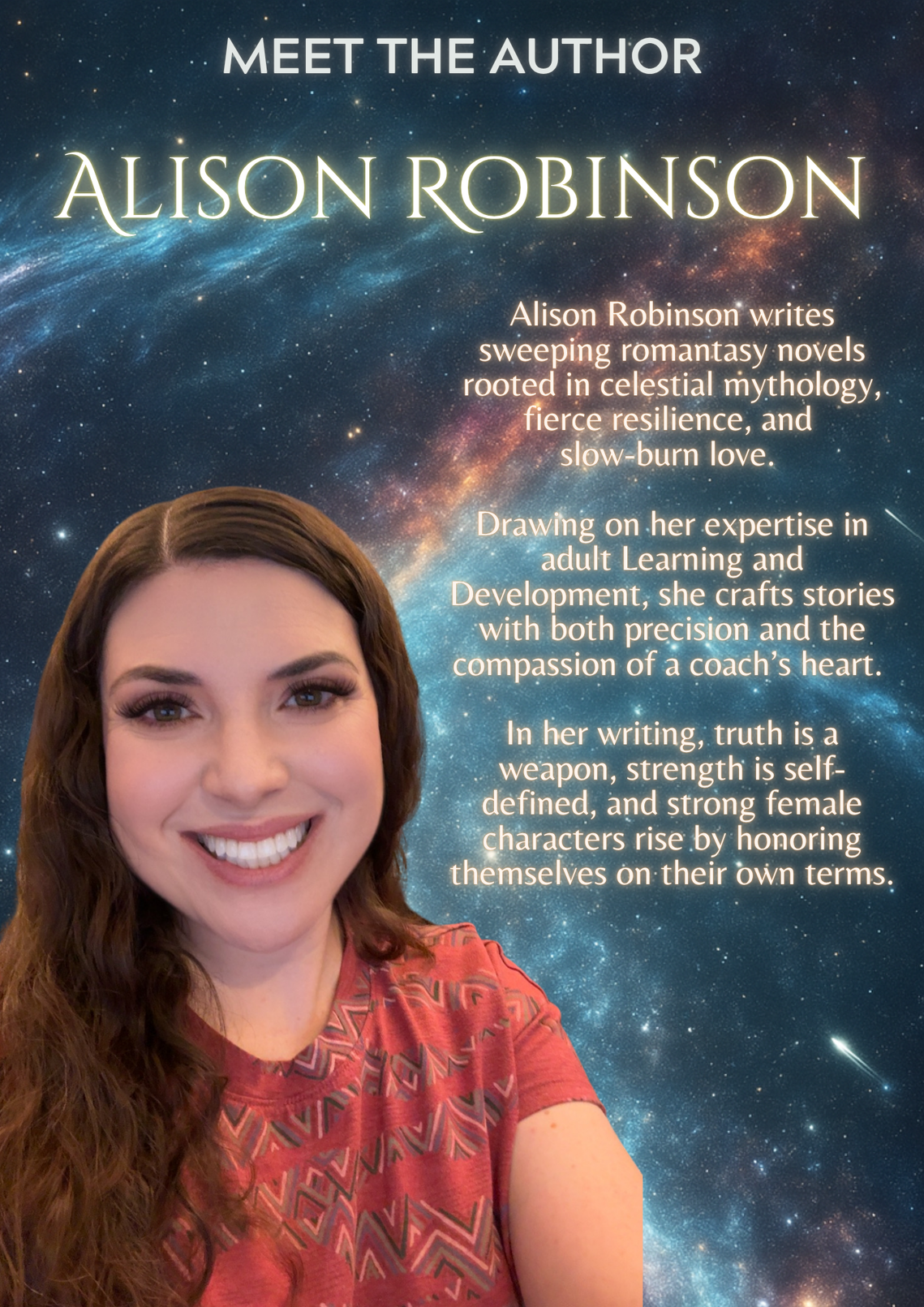
Alison Robinson is a romantasy author whose work blends mythic worldbuilding, emotional intensity, and the unyielding power of the human spirit. With a background in adult Learning and Development and transformational coaching, she weaves narratives that explore identity, truth, and the cost of becoming who we’re meant to be.
Her debut novel, Skyforged, embodies that vision—a cinematic tale of celestial trials, forbidden bonds, and a heroine who must choose between obedience and the truth that could unmake her world. Robinson’s writing is known for its lyrical depth, moral complexity, and the kind of slow-burn romance that leaves readers breathless.
When she’s not writing, she’s building immersive events, mentoring women, spending time with her friends and family (who are known to one another as the Raccoon Family), or planning her next adventure with her fiancé.
She writes for readers who crave heart-wrenching romance, mythic stakes, and stories that stay with you long after the last page.
© 2025 Forge & Flourish Collective and Alison Robinson. All rights reserved. All content on this website and any additional delivered content—including text, characters, names, and images—is the original intellectual property of Alison Robinson and Forge & Flourish Collective. Unauthorized use, reproduction, or distribution is strictly prohibited and will be pursued to the full extent of the law.