
Concrete is not a habitat. But your local park could be.
A science-backed toolkit to help you take one small, meaningful action for pollinators in your town.
Somewhere in your town, right now, there is a bumblebee queen looking for food. She needs pollen. She needs nectar. She needs flowers. What she is finding instead is close-mown grass, sealed surfaces and ornamental planting that looks pretty and feeds nothing.
This toolkit exists because that is not inevitable. It is a management decision. And management decisions can change when enough people ask clearly, with evidence and in writing.
We made it easy to do exactly that.
What is Inside?
Three tools. One mission. Zero excuses.
The Science Background (Ebook) The real reason urban pollinators are struggling, what the research actually says about mowing, pesticides and plant diversity and why your local council has more power here than they probably realise.
The Observation Checklist (Printable) Before you write to anyone, go look at your local green spaces with this in hand. Specific observations make specific emails. Specific emails are harder to ignore. This checklist takes twenty minutes and it will make your case for you.
The Council Email Templates (3+1 Printable Templates) Calm and collaborative. Science-led and firm. Assertive and direct. Three tones, ready to send. You add your postcode and your observations. We did the rest.
Why This Exist?
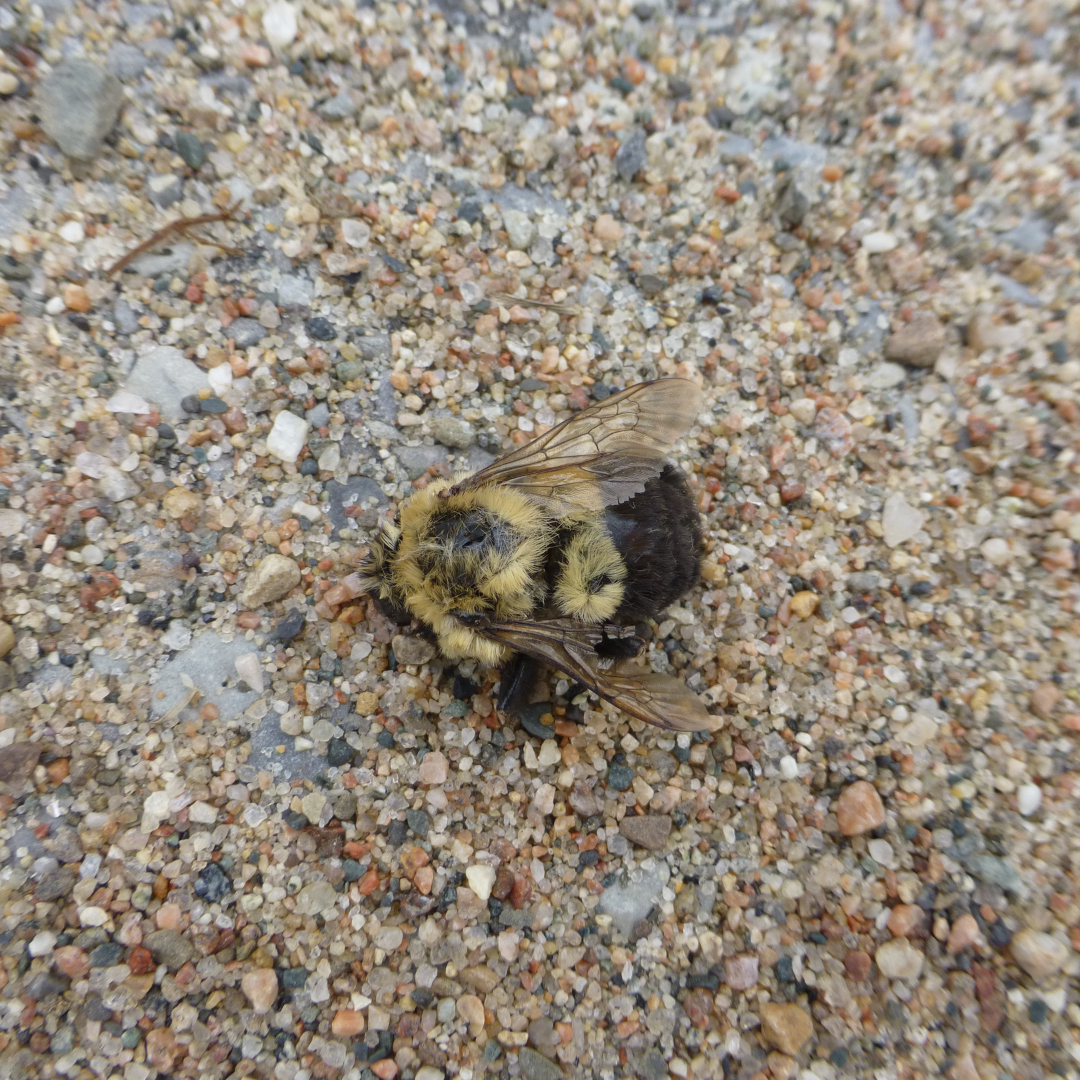
It started with a dead bumblebee on a road.
She was a queen. Dead on the tarmac of a busy town centre road, surrounded by a bus station, a hotel, a large car park and approximately four trees.
My husband asked why she was there. The answer was simple and infuriating: she was hungry. She had been scanning the ground for nectar and pollen and found nothing.
I started asking how many times a day this happens in towns across the world. In parks that are mown every fortnight to a uniform carpet of nutritional zero. On road verges cut before anything can flower. In planting schemes chosen for colour rather than function.
The answer, if you look at the research, is: constantly.
This toolkit is what I built instead of just being angry about it.
She did not want to be on that road. She ran out of landscape.
What this toolkit will actually do for you
⟶ Give you the evidence: you will understand why urban green spaces so often fail pollinators, what the research says and what policy frameworks already support change. You will not be guessing.
⟶ Help you see your local area differently: the observation checklist trains your eye. You will walk past a council-managed park and know exactly what to look for and what to say about what you find.
⟶ Remove the barrier of not knowing what to say: most people who care about this do not email their council because they do not know where to start. The templates solve that. The words are already written.
⟶ Make your action specific and hard to dismiss: vague emails get form responses. Specific, evidence-based emails get read. This toolkit is designed to produce the second kind.
⟶ Connect you to a wider effort: every email sent using this toolkit is one more record, one more signal, one more data point in a pattern that councils cannot keep ignoring. Small actions, collectively, are what shifts local policy.
Not based in the UK? This toolkit still works for you.
The examples, legislation references and plant species in this toolkit are drawn from a UK context. But the underlying science is universal. If you are based elsewhere, the observation checklist and email template structure translate directly. Simply replace the UK policy references with your own country's relevant legislation or environmental frameworks and swap the plant species for native equivalents in your region. The approach is the same everywhere: local action, evidence-based, persistent.

Ben - Edinburgh, UK
I have walked past the same park for three years and never thought about it as habitat. Now I cannot stop seeing what is missing. I sent the email on a Tuesday. Got a response by Friday.

Gill - Bristol, UK
I used Template 2 because I wanted to be taken seriously. My local councillor actually forwarded it to the parks team and asked them to respond directly. I have a meeting next month.

Mark - Toronto, Canada
I adapted the templates for my council in Ontario. The bones of the argument are exactly the same. They are reviewing their verge mowing policy.

Hannah - Linz, Austria
Reached out to the Linz council. The evidence-based argument translated perfectly. They are reviewing their verge management practices. All in a single email.

Write to your council. It works.
You do not have to start a campaign. You do not have to go to council meetings or organise a petition or become an expert. You just have to send one email (or maybe two), using the science that is already there, to the person whose job it is to manage the green spaces in your town.
Pollinators do not have a lobby. You are it.
Good things begin with small signals.





© 2026 Beewitching Embassy, Inc. All rights reserved.