Self-Care Practices for Writers and Editors
Download a free guide to self-care practices for writers and editors.
You’ve invested time, energy, and creativity into your writing. And let’s face it, whether you write fictional short stories, edit academic journal articles, or write full-length manuscripts, that investment in your writing can be draining, physically and mentally. Sure, you could work through the fatigue and headaches—but your health and writing won’t thank you for it.
It’s time to say no to the power-through and hustle mindset. You and your writing deserve better than physical discomfort and burnout.
You deserve a healthy self-care practice, a chance to reset your mind, renew your body, and restore your creativity.
That’s why I created the Guide to Self-Care for Writers and Editors. This quick-start guide provides you with self-care steps you can immediately incorporate into your writing and editing processes.
Ready to say goodbye to burnout?
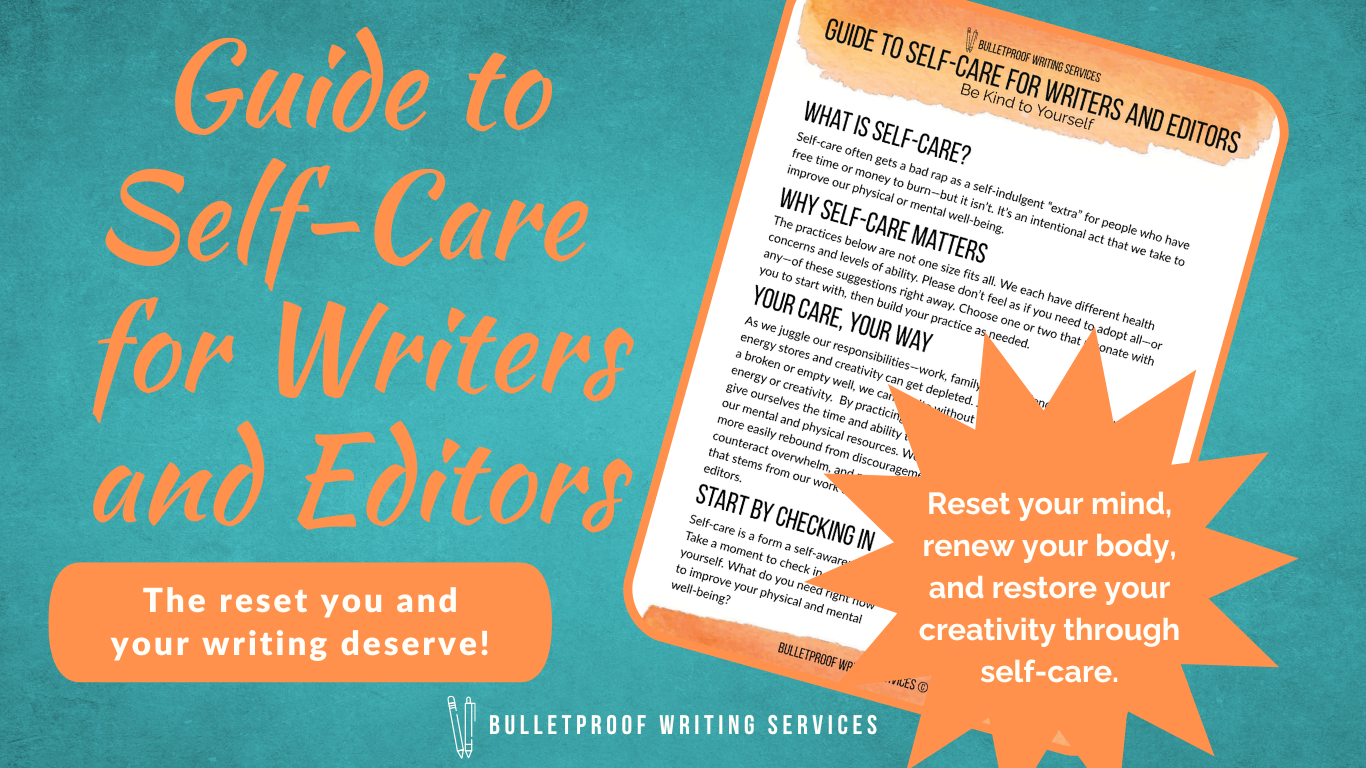
Download your free Guide to Self-Care for Writers and Editors.
💡 Why Self-Care Matters for Writers and Editors
Writers and editors spend hours sitting, looking at screens, and performing repetitive motions; it’s no wonder we physically ache after a writing session. Headaches, eye strain, back, neck, and wrist pain—all of these are typical complaints after a day of drafting and revising.
Plus, we all have responsibilities other than writing—work, family, volunteering, or chores, just to name a few. As we juggle writing with our other commitments, we deplete our energy stores and creativity. If we don’t stop to renew and reinvest in ourselves through self-care, we can burn out. We can get stuck with writer’s block or impostor syndrome.
Physical pain, fatigue, and mental health struggles are serious. These are signs that your body needs a break. They’re signs that your writing and editing processes need an overhaul. If we ignore these signs over the long term, we risk our health and the quality of our work.
Enter self-care.
By weaving self-care practices into our writing process and editing workflows, we can improve the quality of our work and write more efficiently—all while treating ourselves with kindness and listening to our bodies.
This isn’t about face masks and massages. The Guide to Self-Care for Writers and Editors gives you immediate, actionable steps to protect your physical and mental health by adjusting your writing process to better account for your specific needs.
Be Kind to Yourself
Every stage of the writing process is challenging, from brainstorming to marketing. And with writing and editing, there’s always just one more thing that we need to do: Jot down that plot point. Adjust the tone of an article. Email a media kit. Work through your editor’s revisions. Post on social media. Respond to reviews. It feels as if the work never ends.
That doesn’t mean you need to work nonstop, though.
Show yourself some kindness by incorporating self-care practices into your workflow. With my Guide to Self-Care for Writers and Editors, you can reclaim some “you time.” And there’s no need to feel guilty about practicing self-care. When we look after our physical and mental health, we can reapproach our writing projects with fresh eyes and a renewed spirit.
Go on, treat yourself to a free copy of my Guide to Self-Care for Writers and Editors.
📥 Ready to incorporate self-care into your writing routine?
Enter your email below to get the Guide to Self-Care for Writers and Editors and start being kind to yourself today.