Which historical-romance settings do you enjoy most?
💋
Choose as many as you like
2 of 7
What are your favorite romance tropes?
❤
Choose as many as you like
3 of 7
How spicy do you like your reading?
🌶
Choose as many as you like
4 of 7
In which formats do you usually read?
📜
Choose as many as you like
5 of 7
What would you love to see more of in my newsletters?
⚜
Choose as many as you like
6 of 7
Thank you!
❤
7 of 7
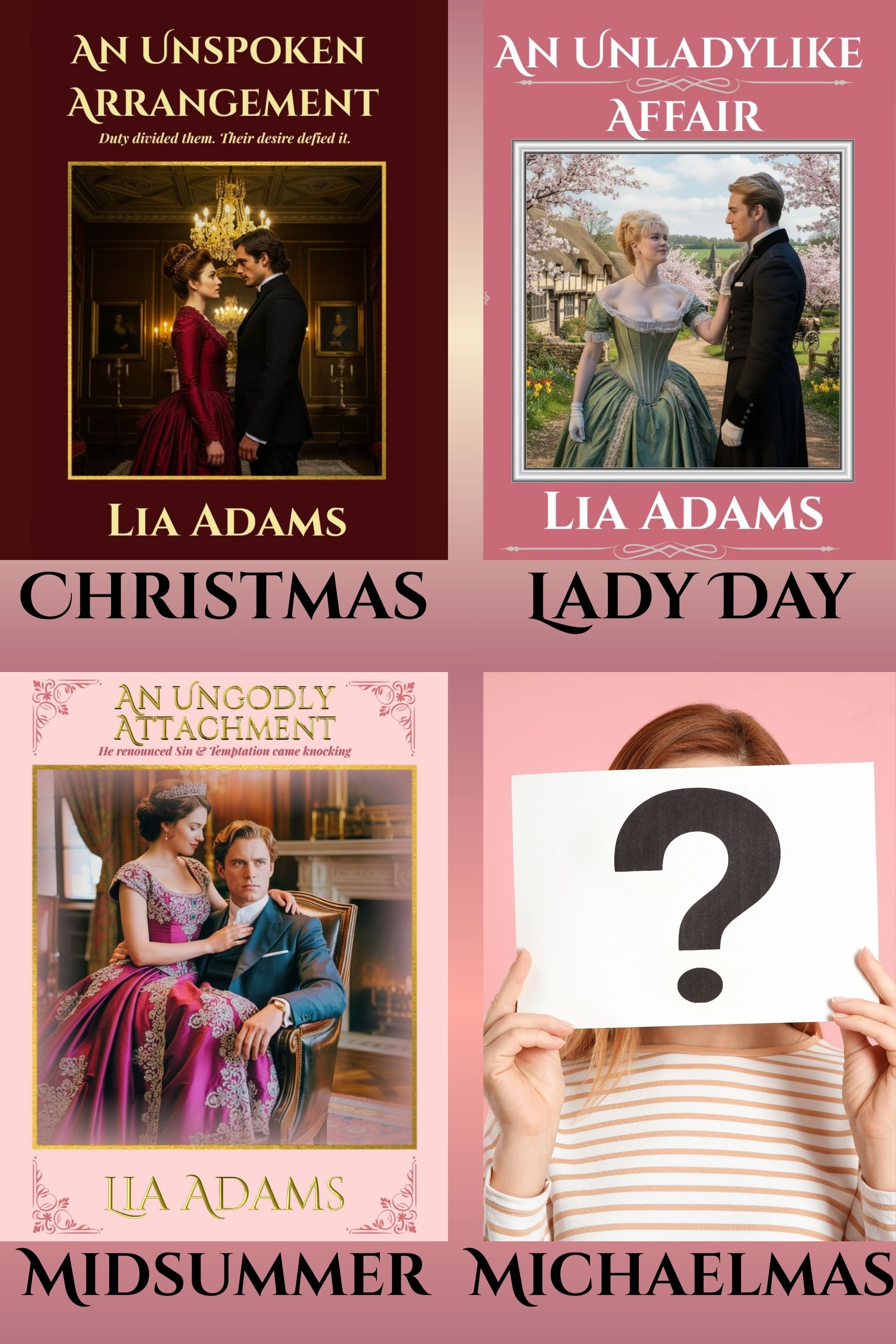
The Quarter Days Series
The quarter days were the most important dates during Victorian times, blending religious festivals with economic and social order. Each book in the series culminates around Lady Day, Midsummer, Michaelmas & Christmas.
The first book in the series is out now: An Unspoken Arrangement
Subsequent books will be released in anticipation of their quarter day, with the next being Lady Day:
An Unladylike Affair
Midsummer:
An Ungodly Attachment
Michaelmas:
An Unwitting Accomplice
Weird History
To Dye For?
How the color of Victorian clothes made the man…or how the Victorian man made the color.
Oscar Wilde once quipped, “Never trust a woman who wears mauve, whatever her age may be, or a woman over thirty-five who is fond of pink ribbons.” But for those familiar with The Picture of Dorian Gray, perhaps “never trust a young psychopath” would have been a more fitting warning.
If I told you that an 18-year-old inadvertently sparked a fashion revolution, you might find it hard to believe. Yet, it’s entirely true. A young William Henry Perkin set out to develop a drug to combat malaria — bless his heart — and instead, he created the world’s first synthetic dye: mauveine. Originally, it boomed in a much brighter hue, captivating everyone’s imagination.
Before this breakthrough, colors could only be sourced from rare plants or exotic animals — an expensive process that reserved vibrant hues for the wealthy elite. When mauveine burst onto the scene, the aristocracy went wild. Queen Victoria herself donned the color, elevating it to royal status.
But, much like a counterfeit Louis Vuitton bag, the lower classes soon got their hands on it, running through London looking like a troop of impoverished grapes. As the color’s exclusivity dissolved, the upper classes recoiled in muted horror, opting for paler shades to distinguish themselves from the masses. Even today, bright colors and rhinestones are often seen as tacky or lower class — think of the beige trend currently sweeping the globe. Subconsciously, we’ve never quite recovered from mauveine’s disruptive debut.
And I did say to DYE for, didn’t I? So far, we’ve seen cheap chorus girls in bright purple gloves and angry duchesses in powder pink dresses. But where’s the death in all this?
You might expect it in the fight against malaria — yet, ironically, the creators of mauveine faced their own peril. The dye’s production was hazardous; the chemicals used were carcinogenic, putting the dye makers at high risk of cancer.
Fortunately, today we can enjoy mauveine — and other synthetic dyes — safely. Thanks to medical advances, by the 1950s, the synthetic dye industry even began contributing to the fight against cancer*.
And the pink ribbon for breast cancer awareness? While not directly linked to mauveine’s history, it carries a similar symbolism — hope, resilience, and the fight for life. From women draped in pink at elegant balls to today’s warriors wearing it as a badge of courage, that ribbon embodies the enduring power of color to inspire and unite.
In a way, Wilde’s warning — “a woman over thirty-five who is fond of pink ribbons” — takes on a new nuance. Once a sign of frivolity or superficiality, today is a symbol of strength and solidarity. Perhaps, in the end, Wilde’s jest reminds us that colors — whether in fashion or in the fight against disease — are never just superficial; they carry stories, histories, and hopes that transcend time.
*They are used in cancer detection, such as in sentinel lymph node biopsies and intra-operative imaging, and in cancer treatment, including photodynamic therapy and chemo-ablation.

Join the Romance Revolution
Subscribe to get exclusive insights, early releases, and heartfelt stories delivered straight to your inbox.

Exclusive early chapters
Behind-the-scenes insights
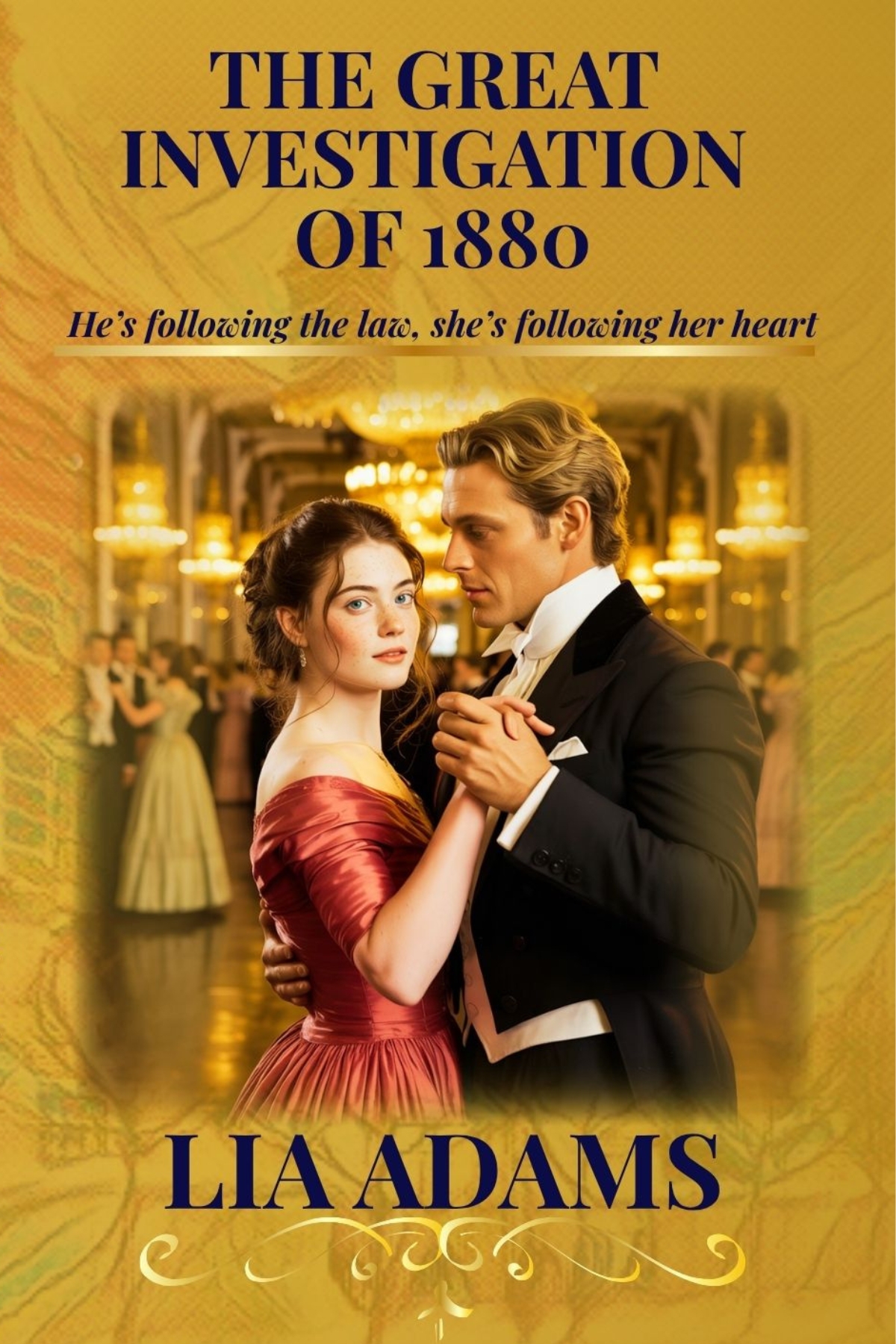
"A well-written story with a compelling storyline...that includes drama, danger, and suspense, along with plenty of unexpected twists and turns and a satisfying, happy ending."
★ ★ ★ ★ ★
B.
Review for The Great Investigation of 1880






© 2023 Lia Adams. All rights reserved.